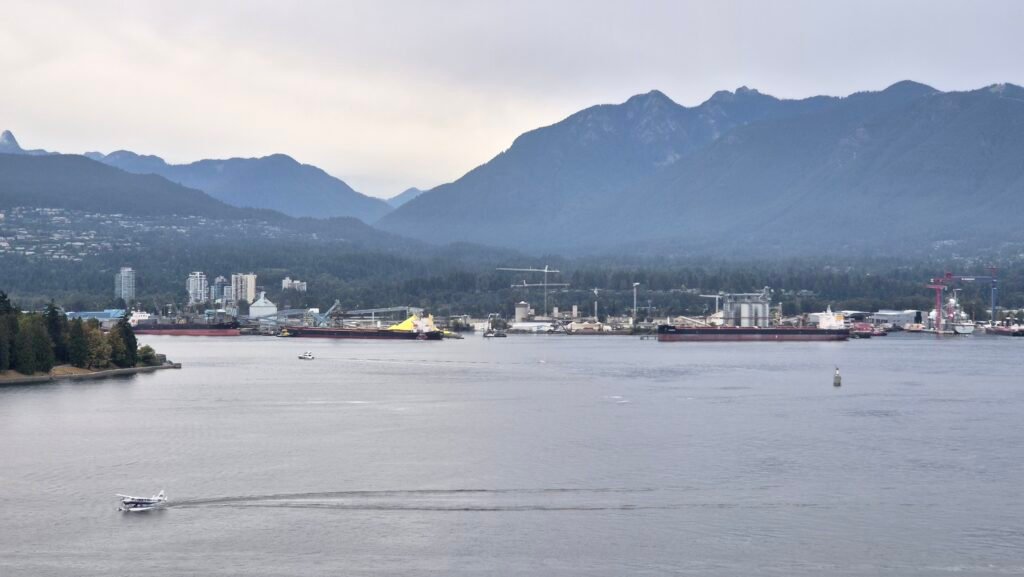
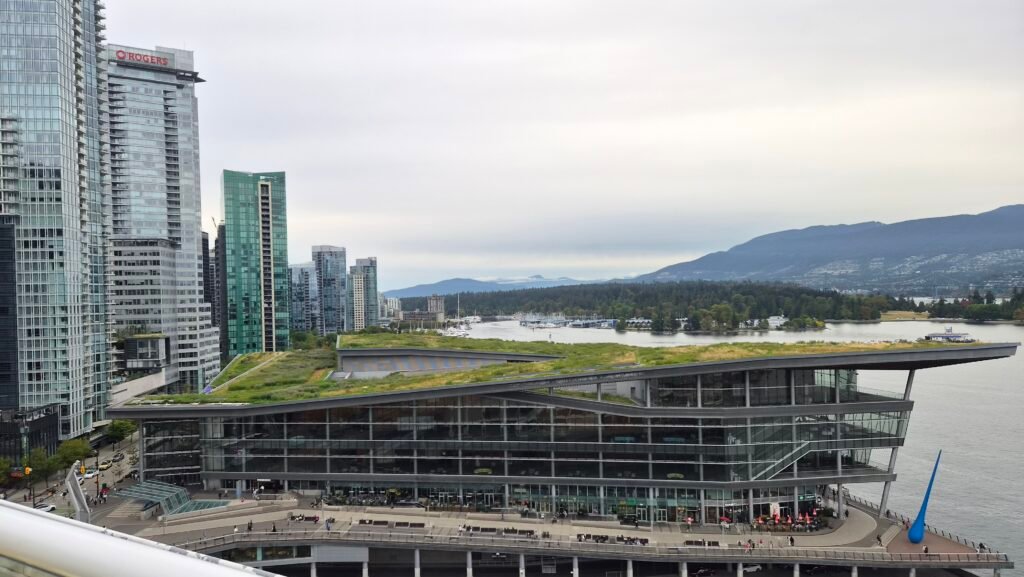
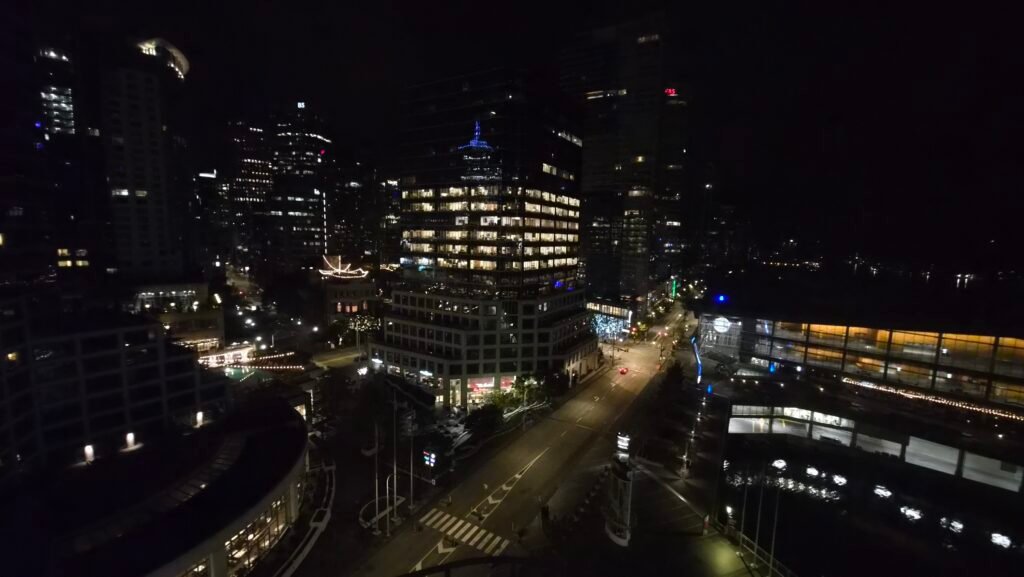
First images from our hotel..
Click on any image to expand.

First images from our hotel..
Click on any image to expand.
We’re off on our main holiday of the year, an Alaskan Cruise followed by a train trip across the Rockies.
Day one didn’t start smoothly, however. “Take the train”, I said, “it will make getting to Heathrow dead easy”. Wrong!
Just as our lift to the station (thank you, Angela!) was driving us out of Codicote I checked the train website and spotted all trains from Stevenage to London were cancelled due to an ‘incident’. Fortunately we were able to reroute to Luton and catch a London train from there. Unfortunately that was not the last of the problems!
Changing to the Elizabeth Line at Farringdon we headed for Heathrow only for the train to unexpectedly terminate at Paddington due to a suspected overhead power problem. Standing on the platform waiting for an update on the problem was a little worrying when we had a flight to catch! Happily it seemed to be resolved fairly quickly and the next train got us to our destination (although slowly) only about an hour later than planned but still in plenty of time to catch the flight.
I’m pleased to say the 9.5 hour flight to Vancouver went smoothly and without incident!
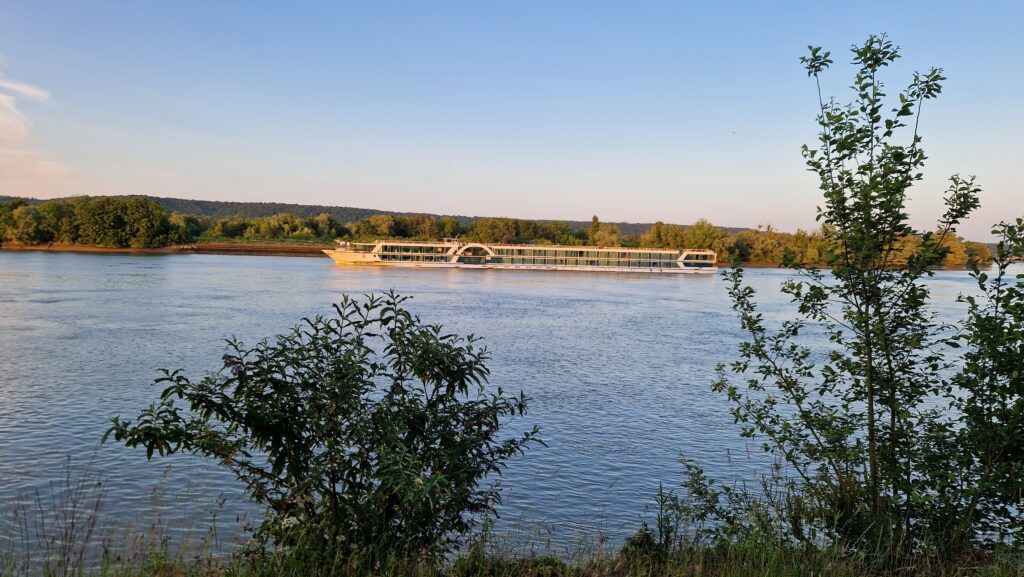
After five weeks we were finally heading home. Two more overnight stops en-route to Calais and the ferry crossing. The first was a return to the aire at La Mailleraye-sur-Seine. We had visited here years ago but little has changed. You set up your chairs on the riverside and watch the cargo ships and cruise ships sail between Rouen and the sea.

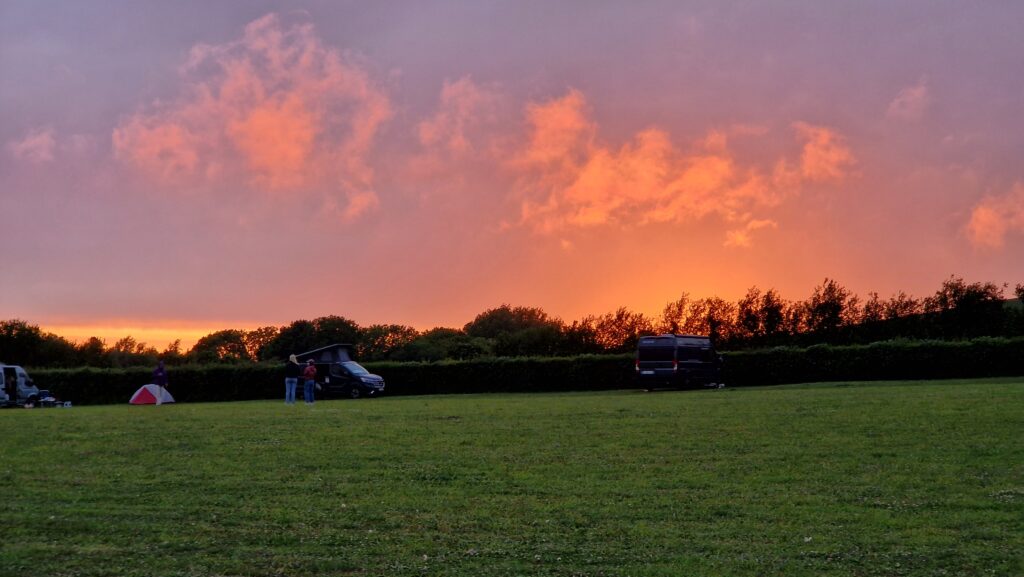
Our final stop was going to be the aire in Boulogne-sur-Mer but, for the first time in the entire trip, there was no room! Using the ever useful Park4Night app we found an excellent alternative aire – basically a farmer’s field in a village called Sombre only 20 minutes from Calais. The sunset provided a nice touch at the end of an excellent holiday.
On the 27th we drove off the island and further north for a 3 night stay at Puy de Fou. This is perhaps the most unusual theme park, often rated as the best in the world. It focuses on historical/mythical re-enactments with 20 hugh shows played out in massive purpose-built arenas/buildings with large casts and incredible technology, bringing the past to life. The location also has it’s own well-equipped Aire with a shuttle bus running to the main entrance – very helpful!
We has visited Puy de Fou once many years ago but it has expanded significantly since then. The shows are a challenge to describe but I hope you can get a flavour of this weird and wonderful location from the following comments on some of the main shows….
Set in the French Revolution, it tells the story of resistance fighters during the War in the Vendée. You sit in a huge circular building and the 2400 seat audience platform rotates 360˚ as the action plays out around you.

Featuring the 3 Musketeers, the show has plenty of sword fights and stunts. The finale involves the whole stage being flooded with water and horses and flamenco dancers splashing through it (don’t ask!).
Set in the 4th century as the Roman Empire is starting to weaken and the local Gauls are putting up some resistance. The show is set in a massive recreation of a Roman arena (seating 7000) with chariot races and other battles between gladiators and slaves. The finale involves the centrepiece of the colosseum converting into a huge Roman galley, which turns 360˚ before being set on fire!

King Arthur and the Knights of the Round Table have been imprisoned by Morgan le Fay. It’s down to Tristan and his men to find Excaliber and release Arthur. The show involves huge amounts of scenery moving on the set and Tristan has a swordfight with a tree (don’t ask!).
Around the 9th century, a wedding in a quiet village on the coast of France is interupted by the invasion of Vikings. Lots of battles and plundering follows, including the dramatic arrival of two Viking longships, the second of which rises up from the middle of the lake, complete with crew on deck!
There are plenty of well trained animals and birds at Puy de Fou but I am still amazed this microlight pilot (spotted while we were walking between shows) managed to get a flock of birds to fly in formation behind them!

We’re in the 15th Century, in the middle of the Hundred Years War. A young shepherdess helps Joan of Arc defend the Château from the English (boo!) and the Burgundians. Lots of knights in armour and trick horse riding, also soldiers running down the side of a tower wall (don’t ask!).
I especially loved this show, set in 1914. You are in a studio watching the making of a black & white silent movie about the love story between a mime and a movie star – the director wants the movie to burst into colour and sound. The effects are very impressive with moving footpaths and a huge rolling backdrop.
We booked into this restaurant in the evening of our second day. It is, of course, another show. We are guests at a wedding reception set in 1914, the Belle Epoque period. The food was excellent but the wedding doesn’t go to plan. Needless to say, the waiters and waitresses burst into song & dance!

Our last show at Puy de Fou started in darkness at 10:30pm and was typically bonkers and dazzling at the same time. A classical music concert in the middle of a lake with musicians and ballet dancers dressed in LED covered outfits (and lots of fountains). A delightfully mad ending to a very entertaining two days!
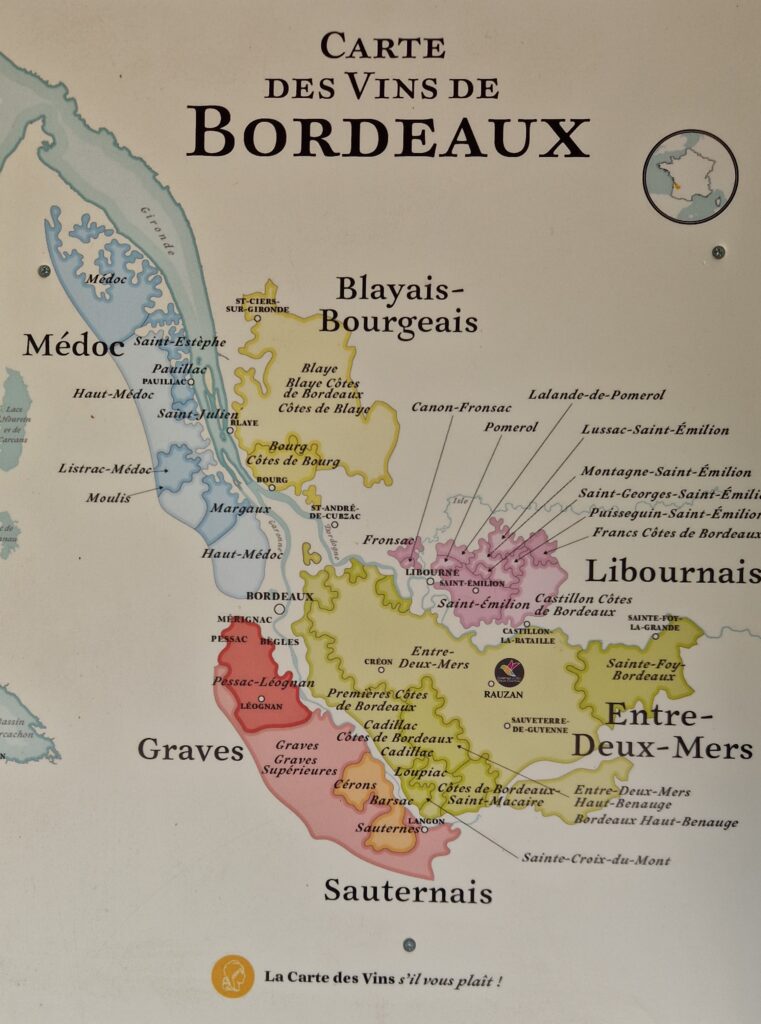
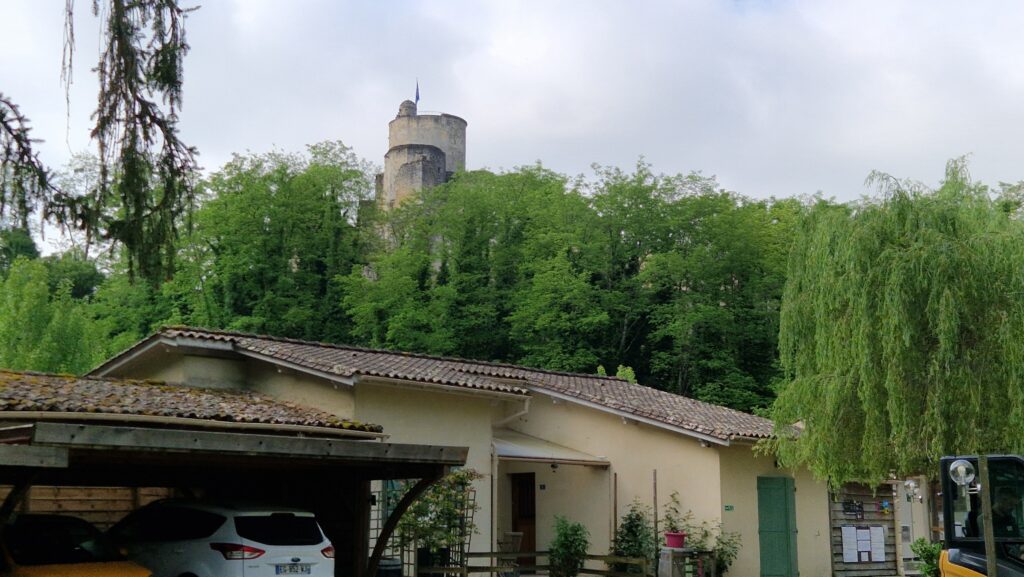
On the 21st we drove east along the coast and then north across the border into France. After a supermarket stop outside Biarritz we travelled on through a region full of huge vineyards. We stopped for 2 nights at a small campsite in Rauzan – Camping du Vieux Château – to the east of Bordeaux for that all important access to a washing machine! The site was in the shadow of the remains of a english style castle – Château Rauzan – which we unfortunately didn’t get a chance to visit.
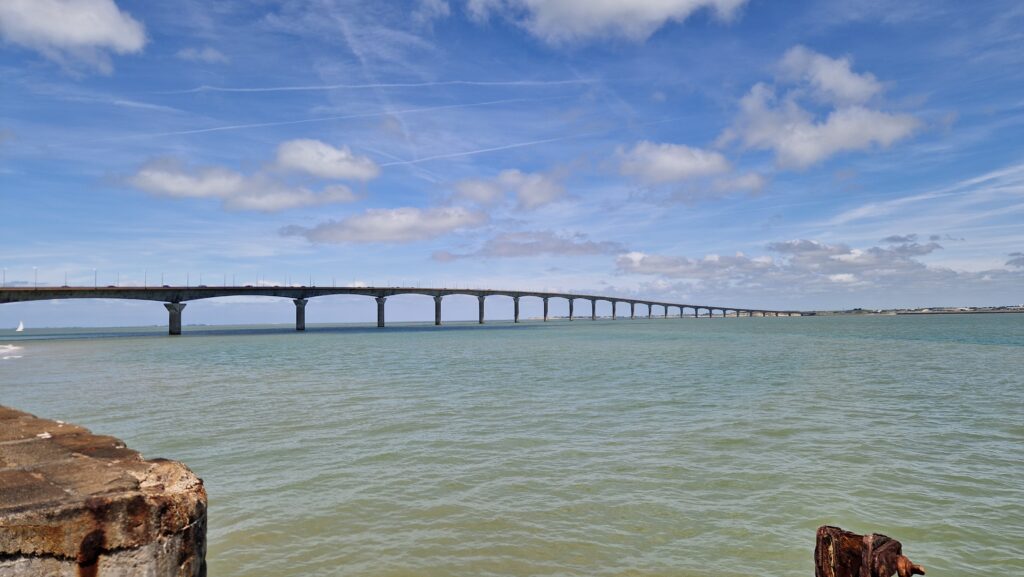
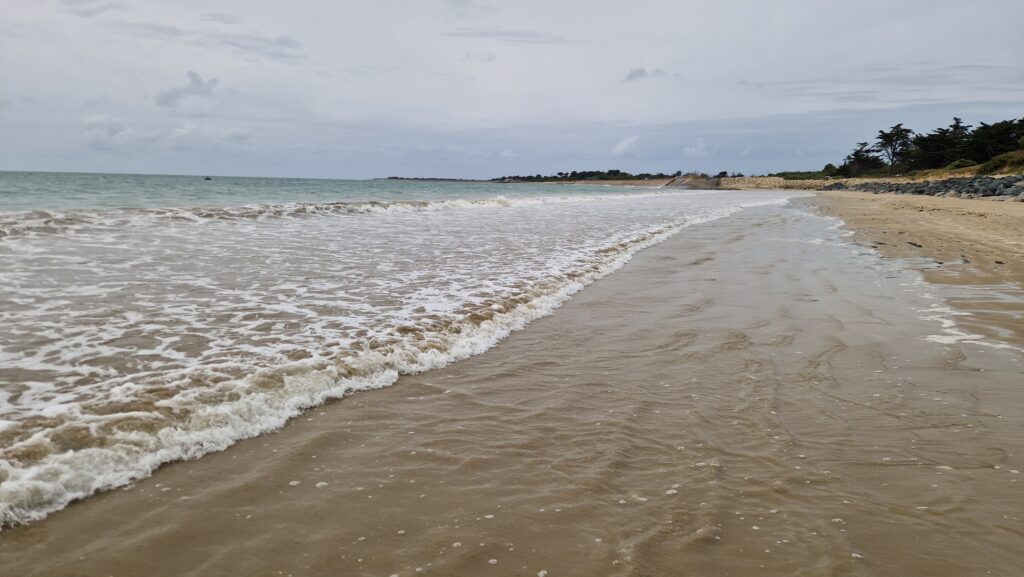
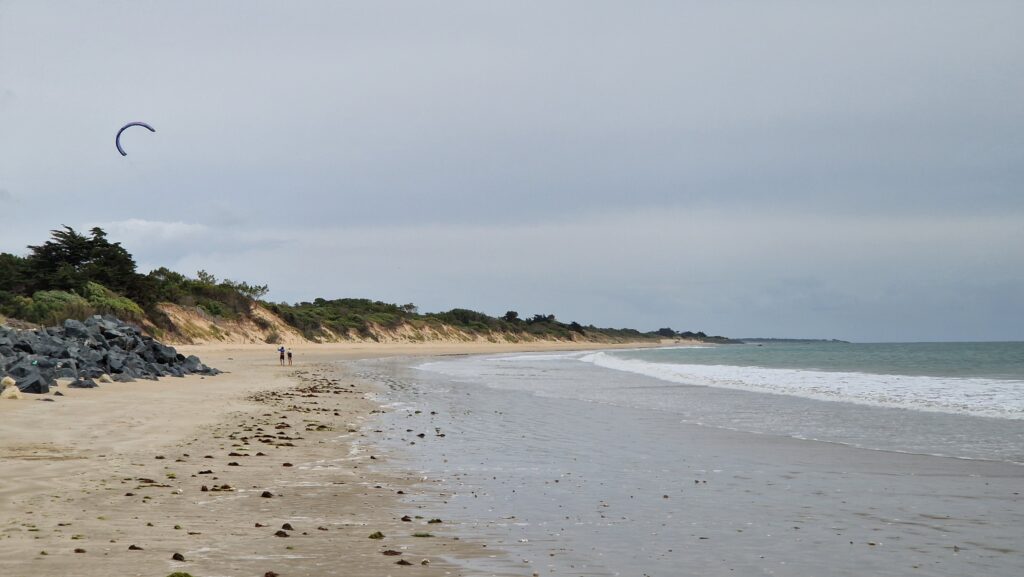
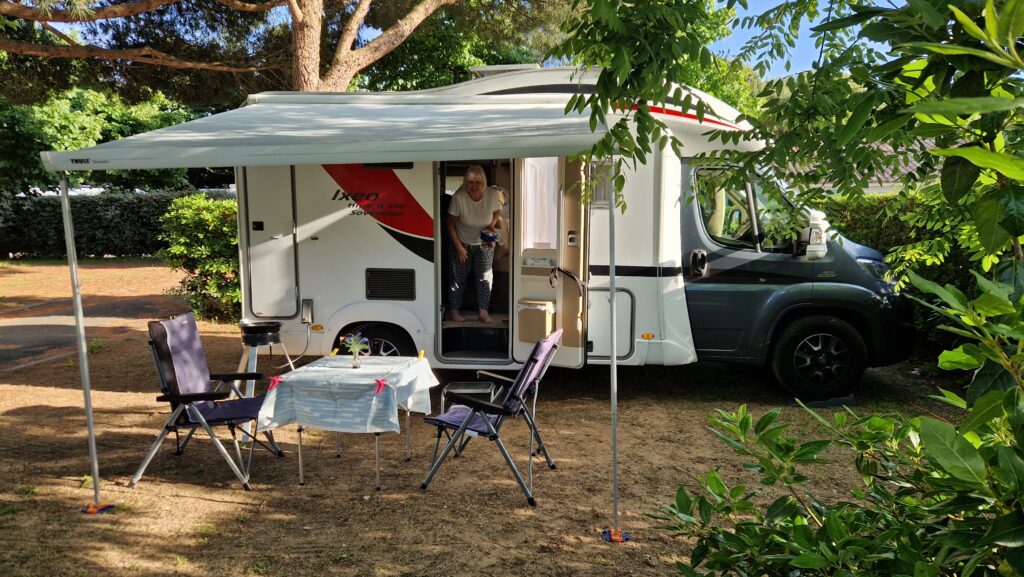
On the 23rd we pushed on northward to a location recommended to us by several people – Île de Ré. The island is accessed by an impressive bridge and is full of amazing sandy beaches, all connected with a expansive cycle network alongside the roads. We had decided to have some proper relaxation time and had booked into the Camping Eden Villages L’Océan for 4 nights. We were even able to get the barbeque out for a few meals!
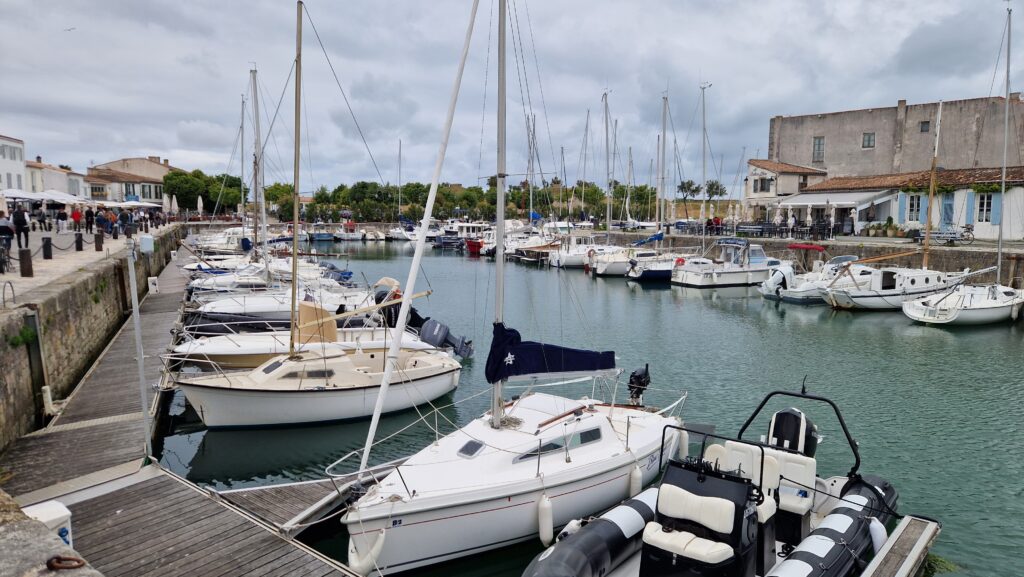
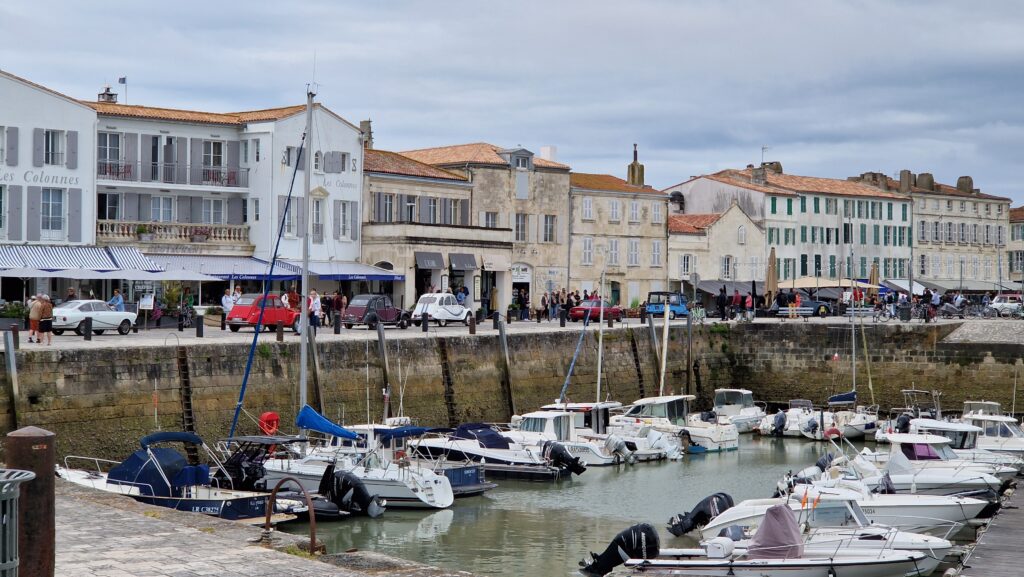
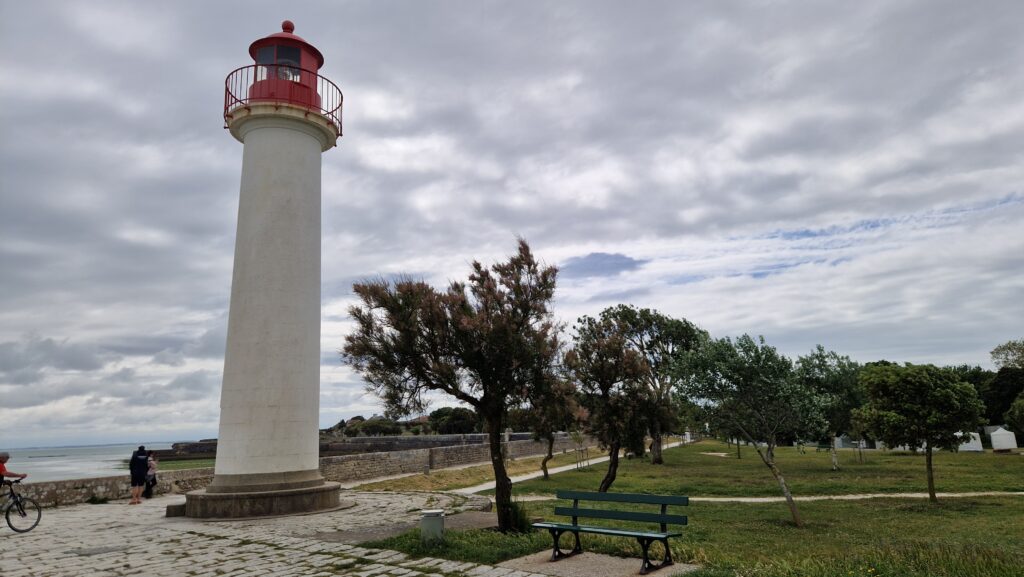
The island has multiple free electric bus routes that run on peak days so we used the service to visit Saint-Martin-de-Ré. It is one of the most attractive towns on the island’s coast, ringed by star-shaped, 17th-century ramparts. We had an excellent lunch at Le Réfectoire which faces out onto the town’s harbour.

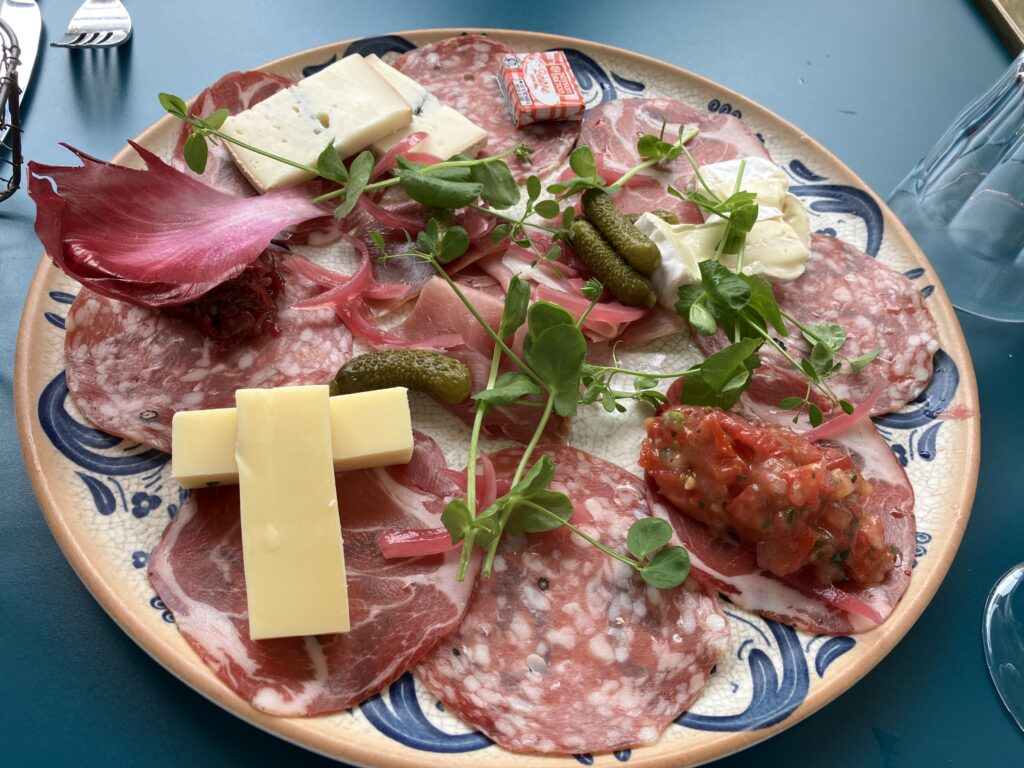
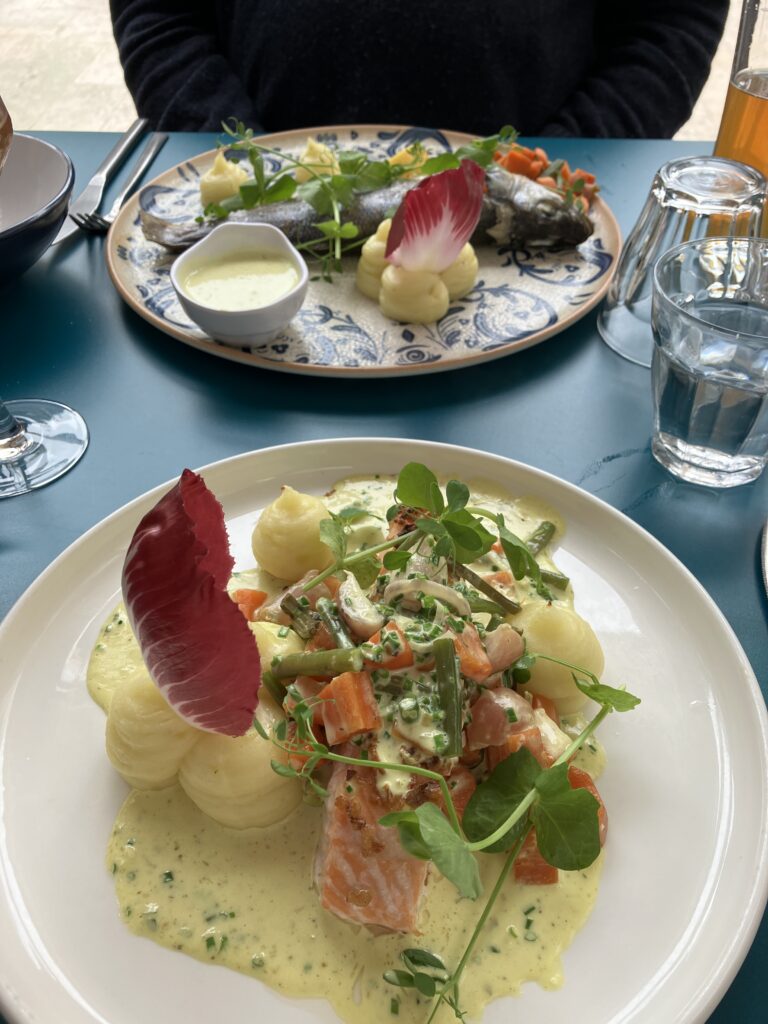
..or Donostia, as it is called in the local Basque language, is a resort town that seems to have everything: a beautiful old town, three huge sandy beaches, lots of walking trails with fantastic views and food (especially pintxos) to die for.
We spent 3 days at a very busy aire, a short bus ride from the centre. The aire seemed to fill with a British contingent towards the end of our stay, we were pretty sure they were en-route to the Europa League Cup Final in Bilbao that evening.


The last photo above was taken in Constitución Plaza, in the old town, now full of popular cafes and bars. If you look closely there are numbers over every door on the balconies. This is because the plaza used to be the town’s bullring and the balconies housed the boxes for the richer spectators!
We took a historic wooden funicular to the top of Mount Igueldo on the western side of the town. There is a funfair at the top but it’s main attraction is the spectacular view back over the town.


…. including the excellent Basque Cheesecake!


I would certainly be very keen to come back to the town in the future!
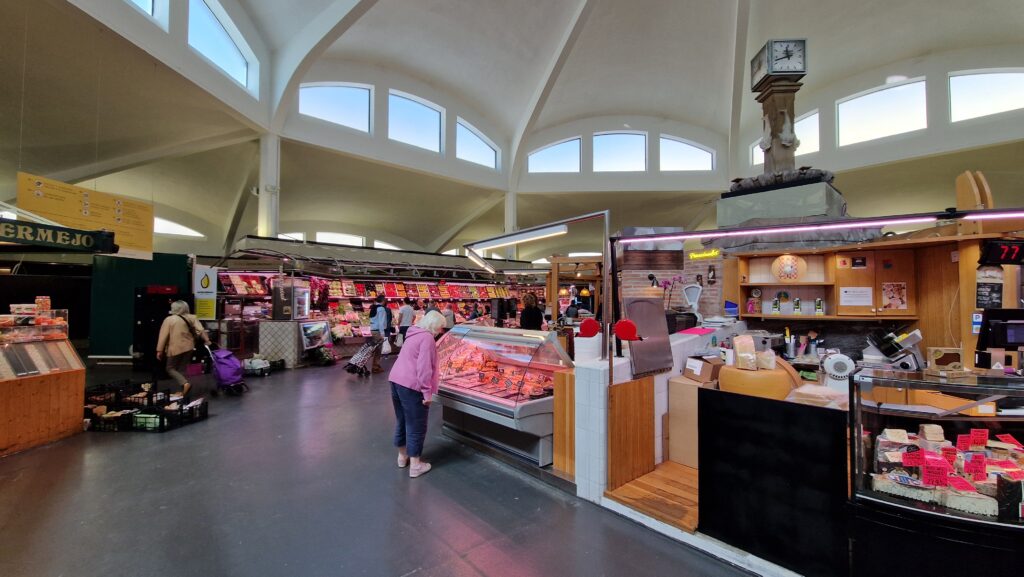
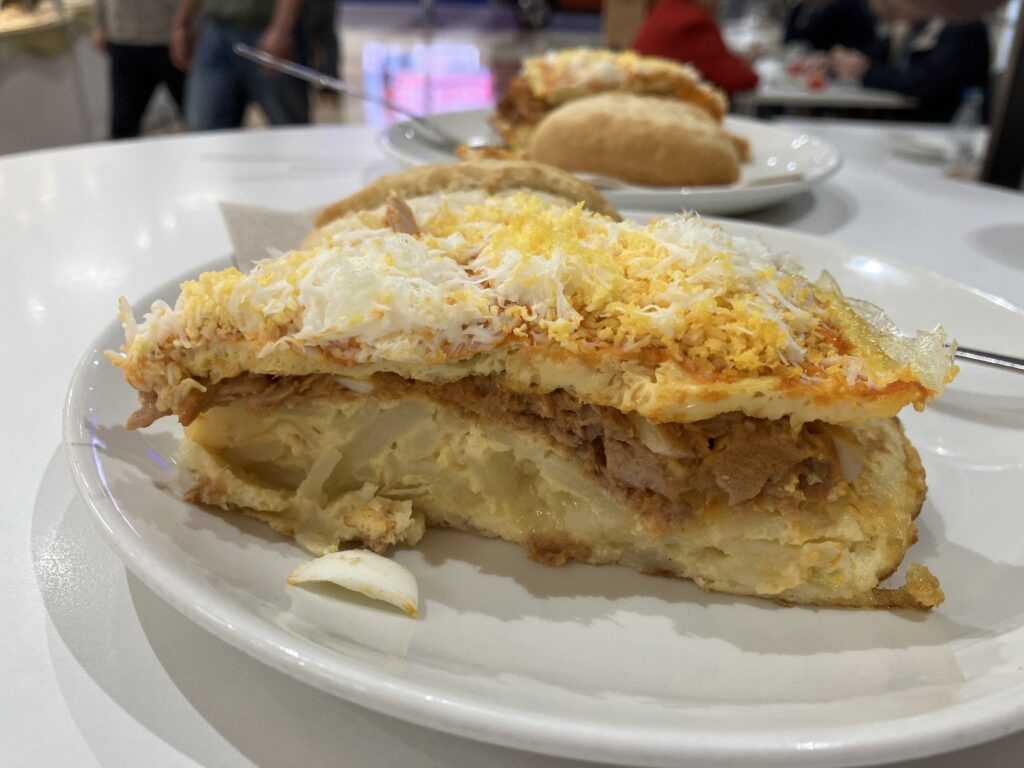
On the 16th we arrived at an aire on the eastern outskirts of Pamplona, in the very modern district of Sarriguren where part of the city’s university is based. The following day we caught a bus into the city centre. The centre has a mix of modern and very old architecture with lots of big tree lined avenues. The city’s old fortress has now been converted into a very peaceful park. There was also, of course, two excellent food markets.
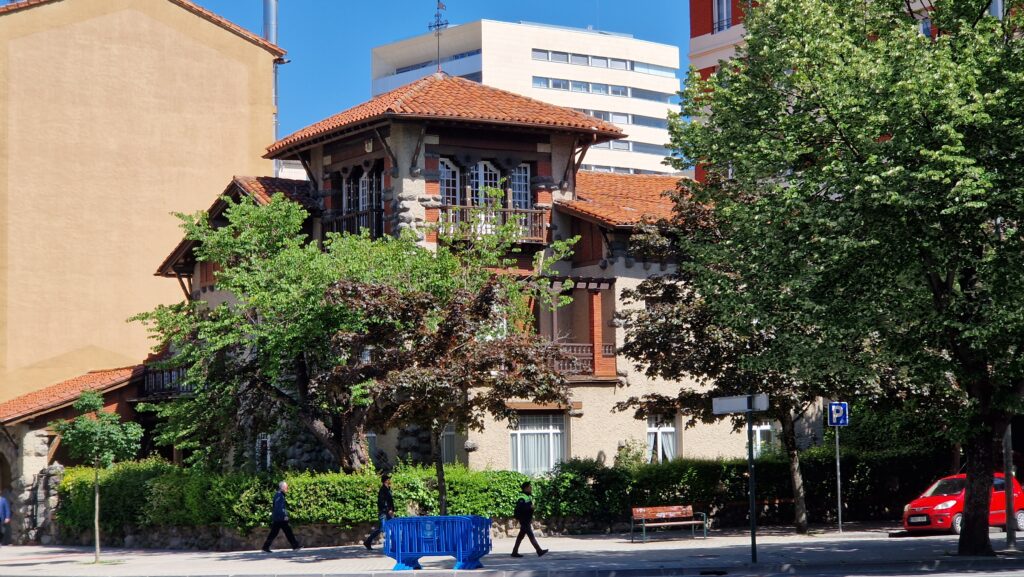
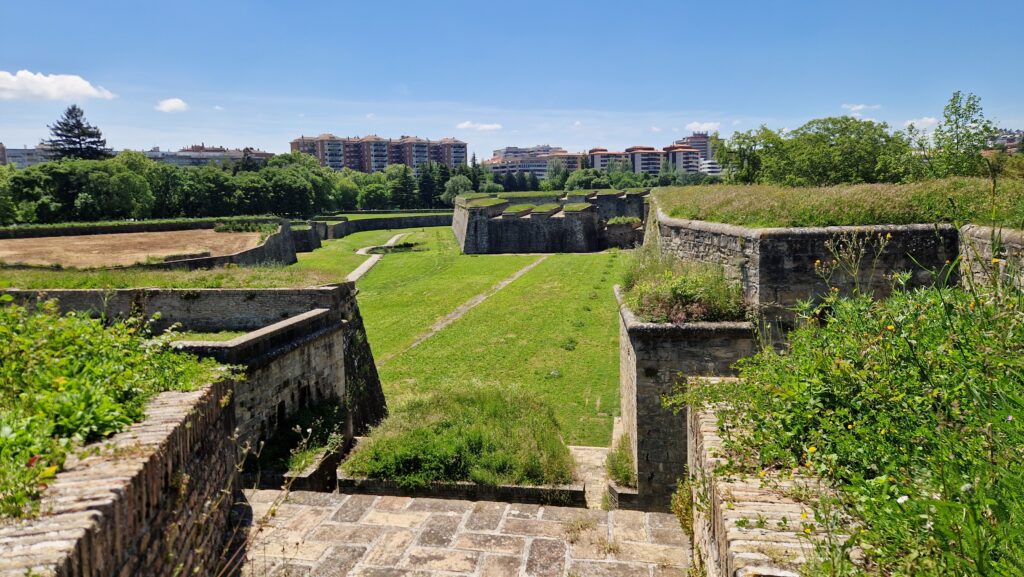
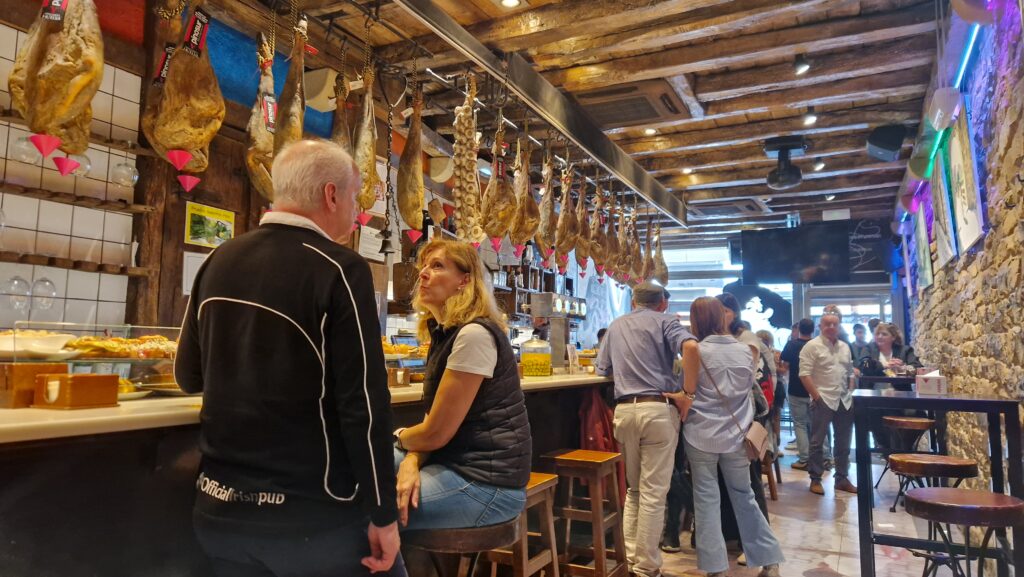
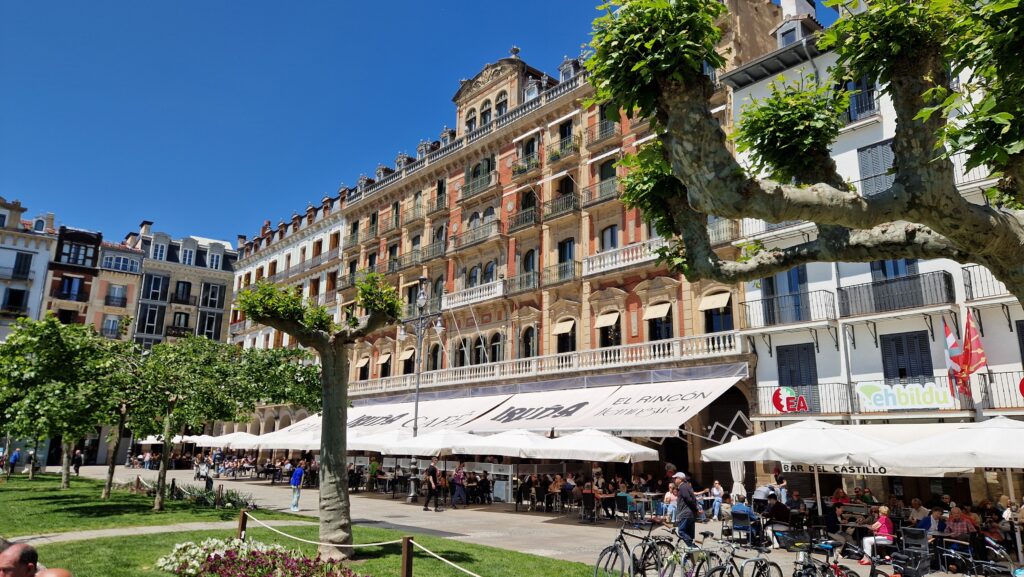
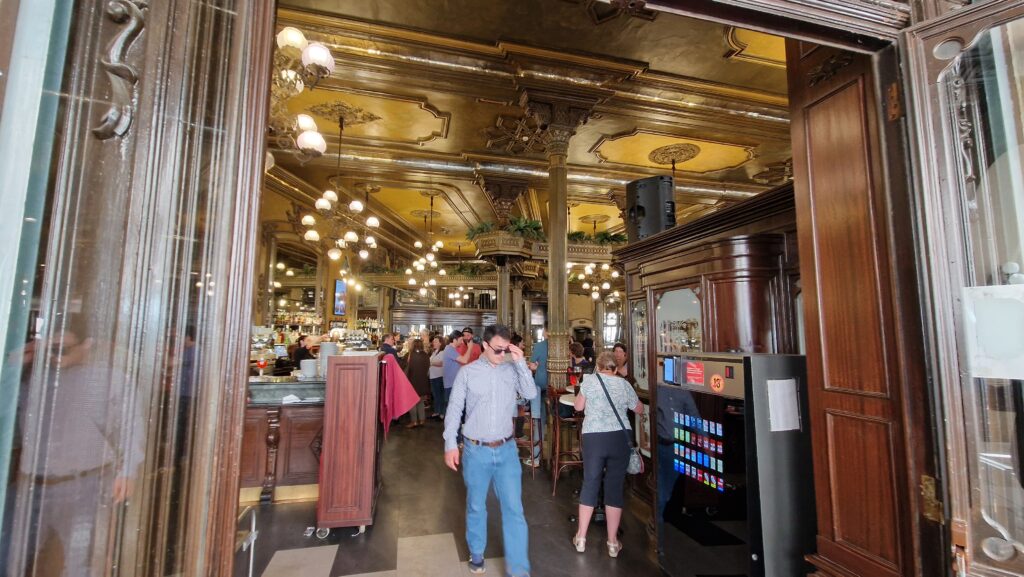
The old town’s narrow streets were full of bars serving pintxos. In the Plaza del Castillo some more upmarket cafes could be found, including Cafe Iruna with it’s impressive wood panelled interior which opened in 1888. It’s list of famous customers includes Ernest Hemingway.
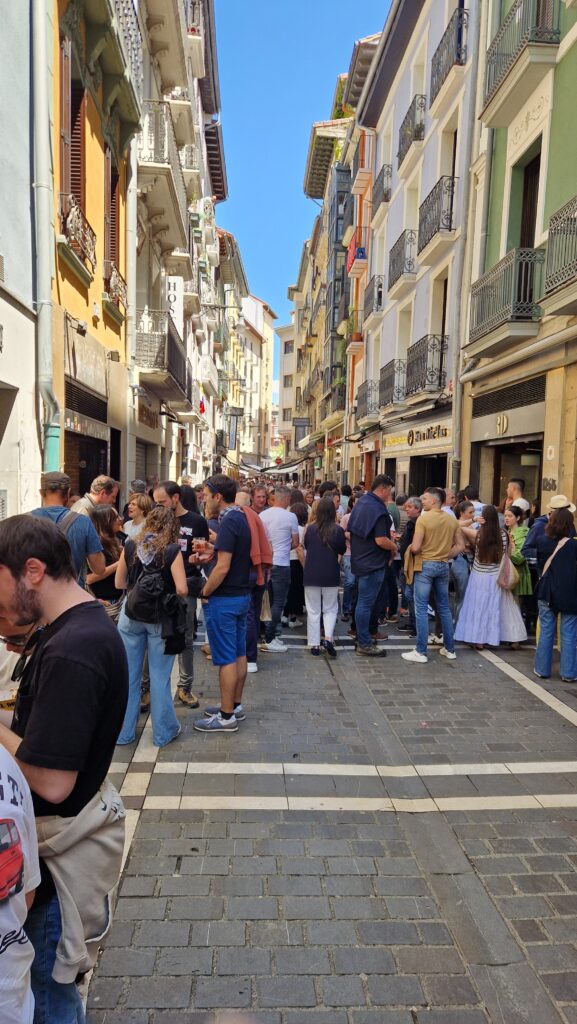

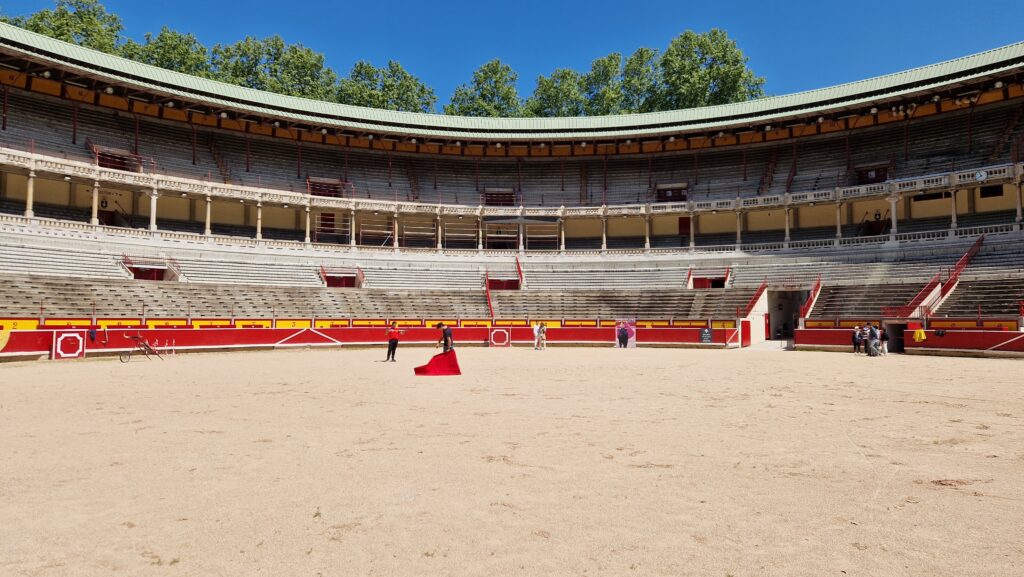
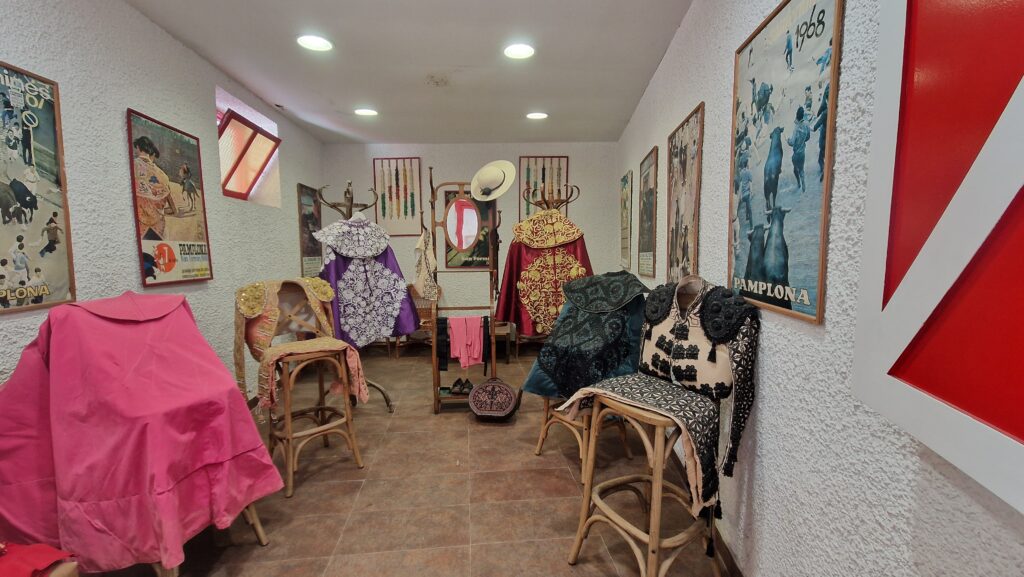
The city is perhaps most famous for it’s bullring and twice-yearly bull run when bulls are driven through streets crowded with apparently crazy people who attempt to outrun the bulls or, at least, avoid the very sharp horns! Bull Fighting is a very anachronistic and divisive activity in these modern times but there is no doubt it has had a huge impact on the history and culture of the town. We took the tour of the bullring in an attempt to understand this history.
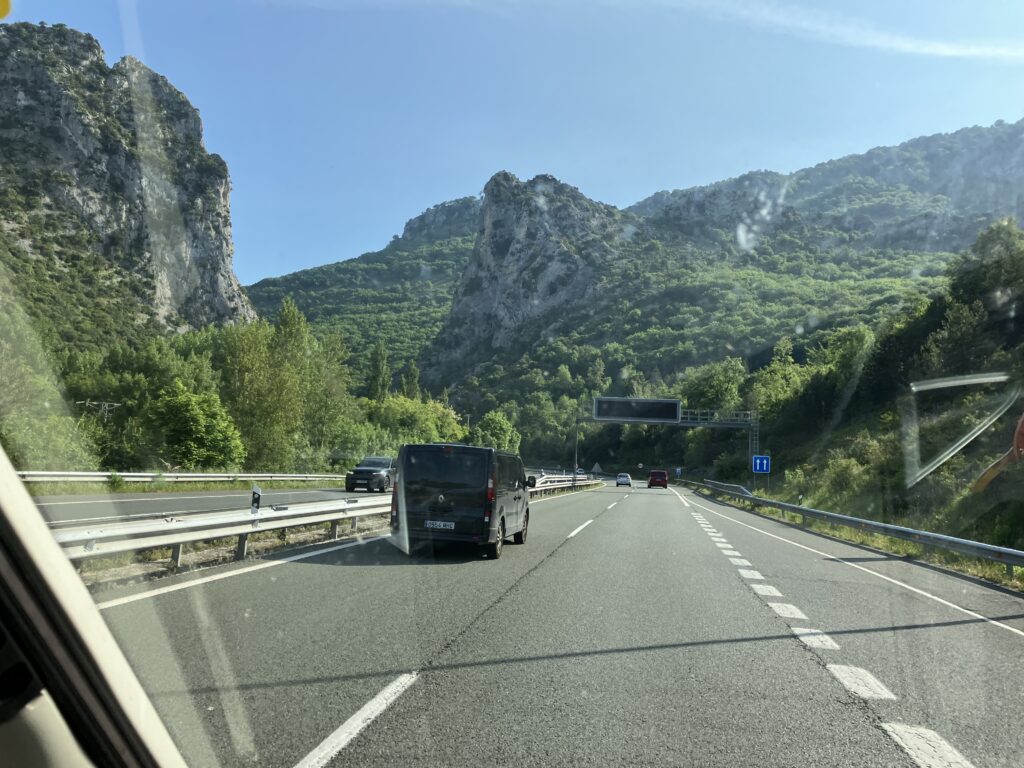
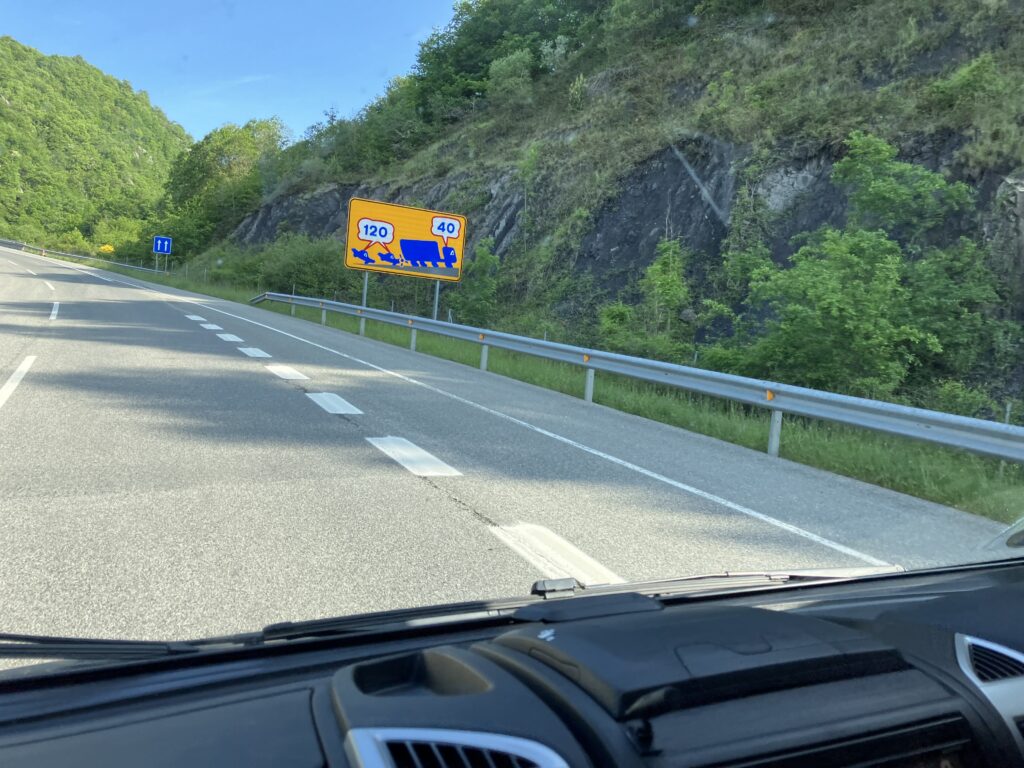
We drove north from the city, north towards San Sebastian on the 18th. The route took us through mountains passes at the western end of the Pyrenees – some of the most spectacular scenery we had seen to date (and some amusing signs encouraging you not to get too close to lorries)!
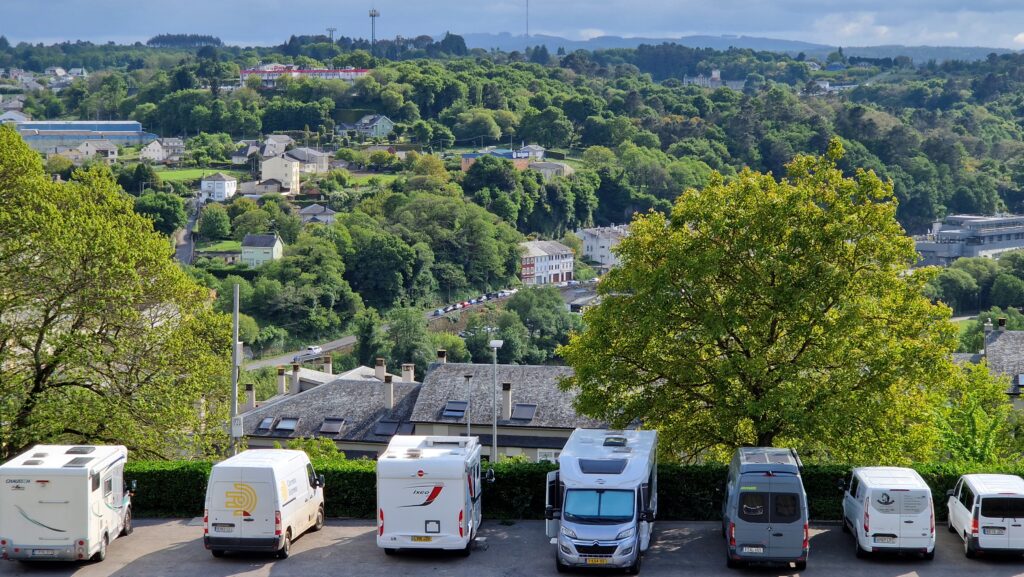
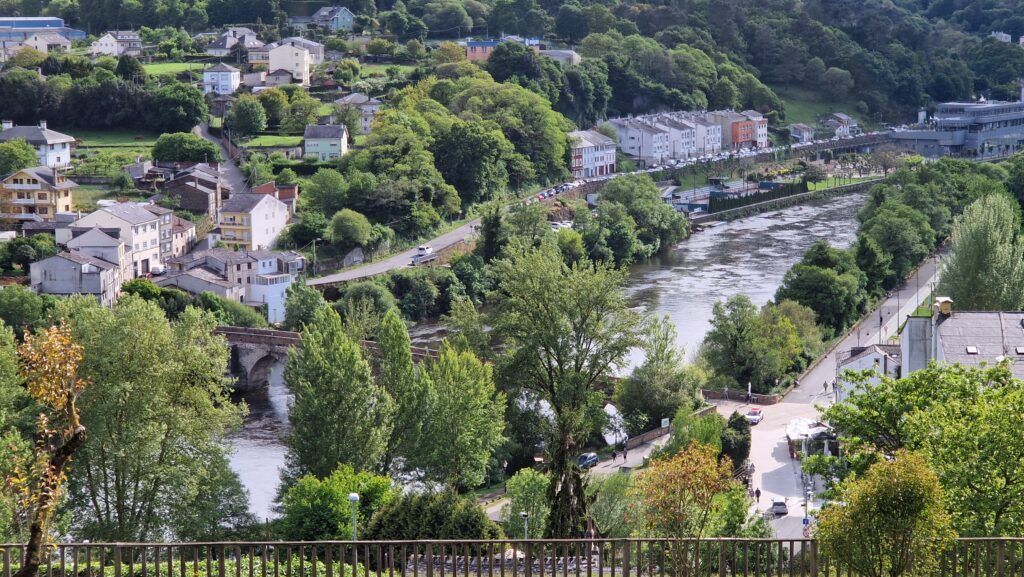
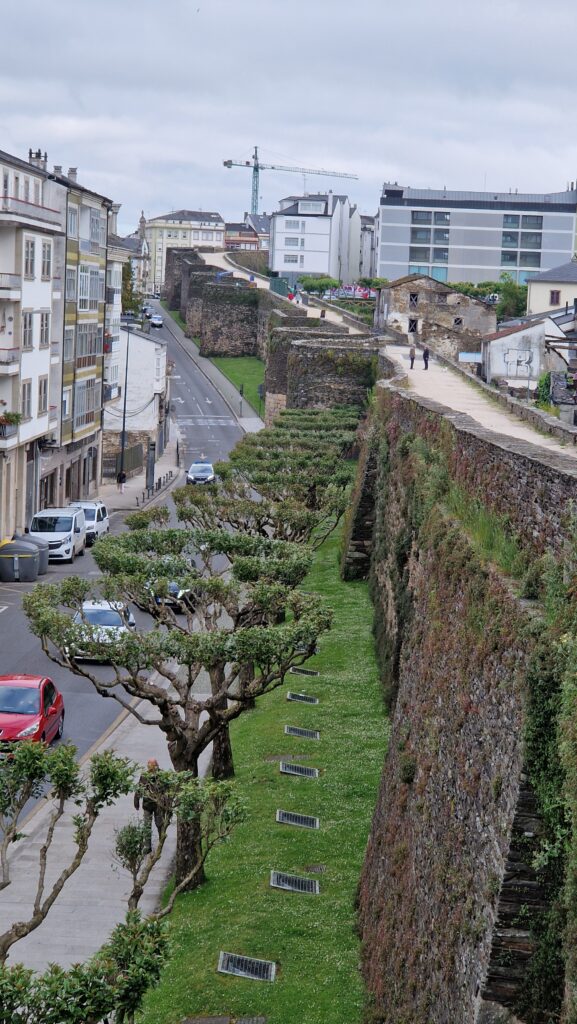
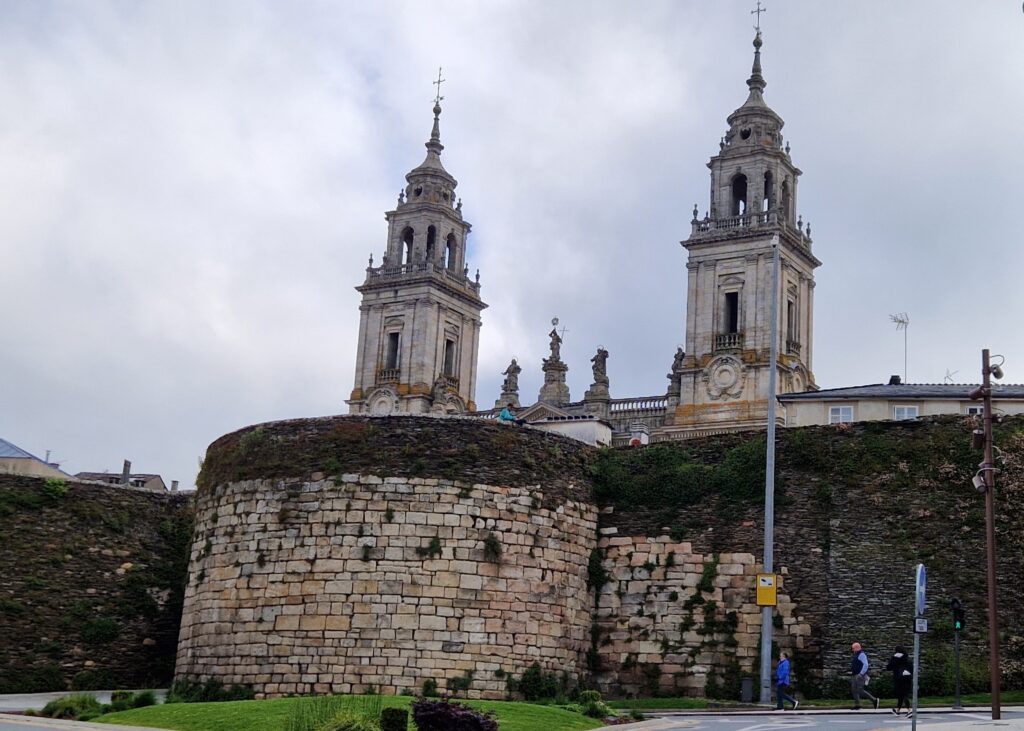
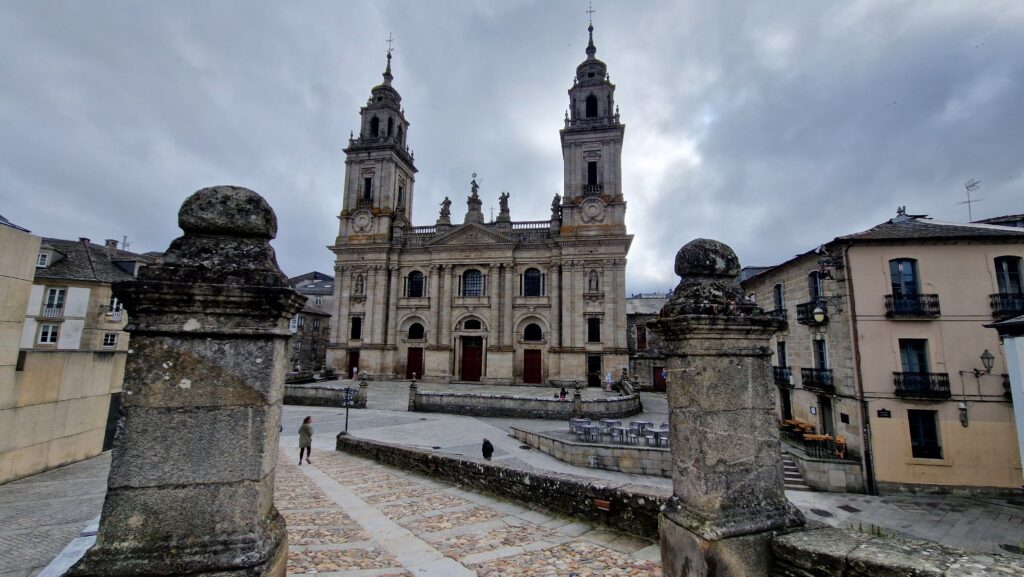
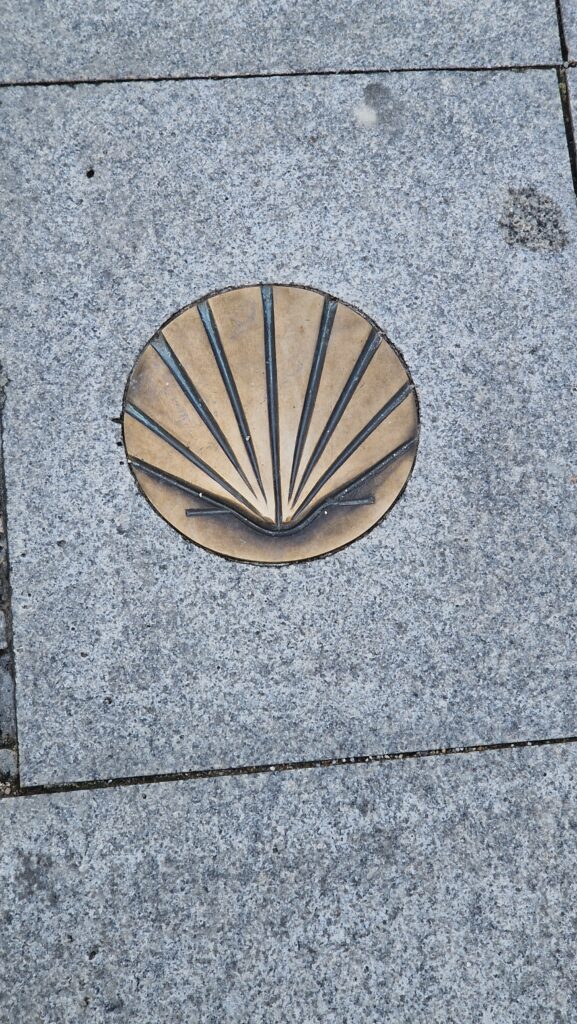
We left Santiago de Compostela on Wednesday 14th, starting our journey back eastwards. We stopped for one night at an Aire overlooking to the river in a city called Lugo. Lugo is most famous for being only city in the world to be surrounded by completely intact 3rd century Roman walls, a UNESCO World Heritage Site. The symbol embedded in the ground by the walls indicated that this location is also on one of the Camino routes.
The next day we drove on to a campsite Camping Fuentes Blancas in the town of Burgos, again for one night. As all the pitches were on grass we had a major challenge after the recent rain finding a spot where the van didn’t sink into the mud!
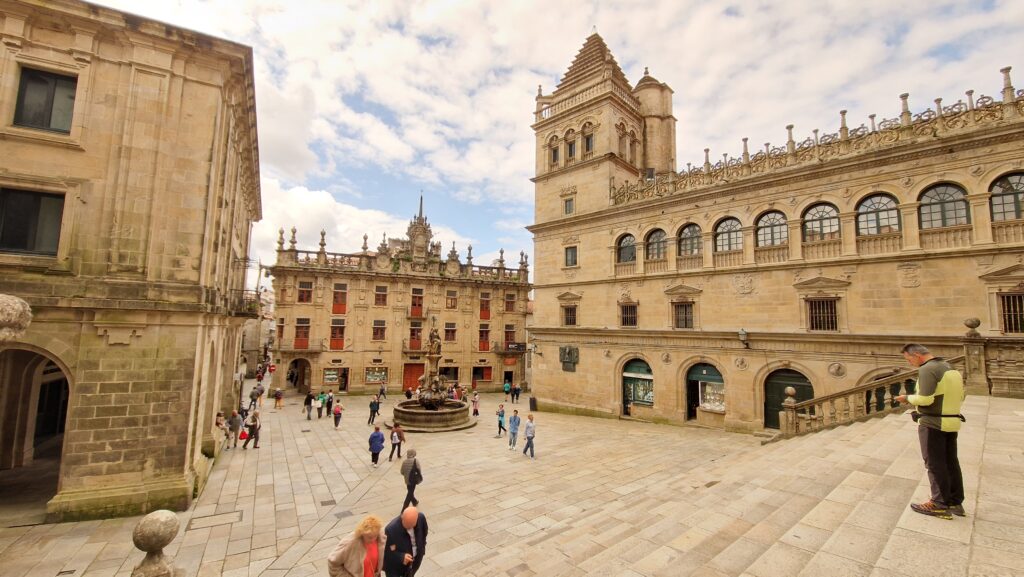
We finally reached the most western point of our trip – the city famous for being the finishing point for the thousands of pilgrims who walk the Camino de Santiago. We walked into the busy old town to the Cathedral which was full of people, many of them clearly very tired pilgrims.
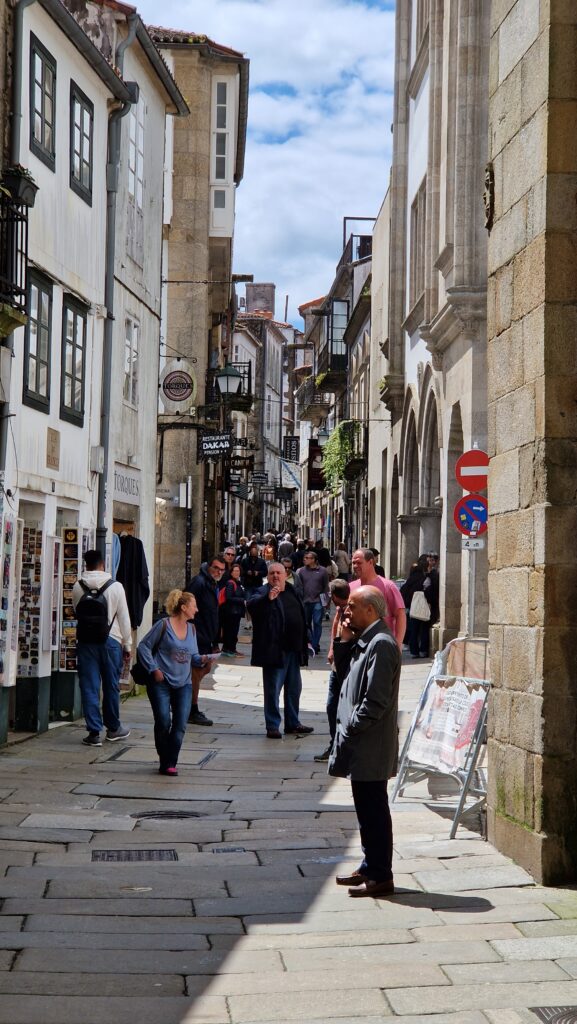
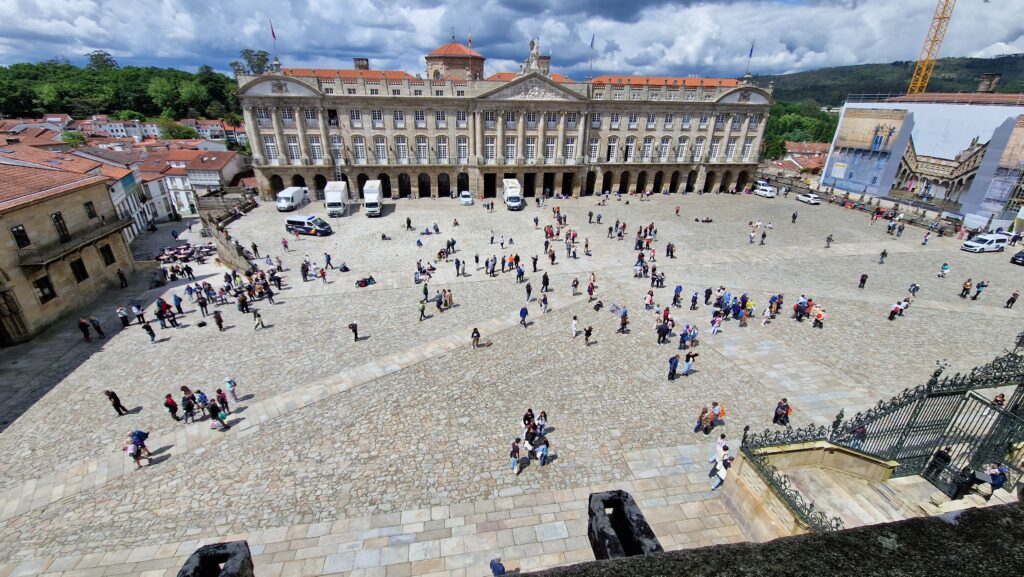
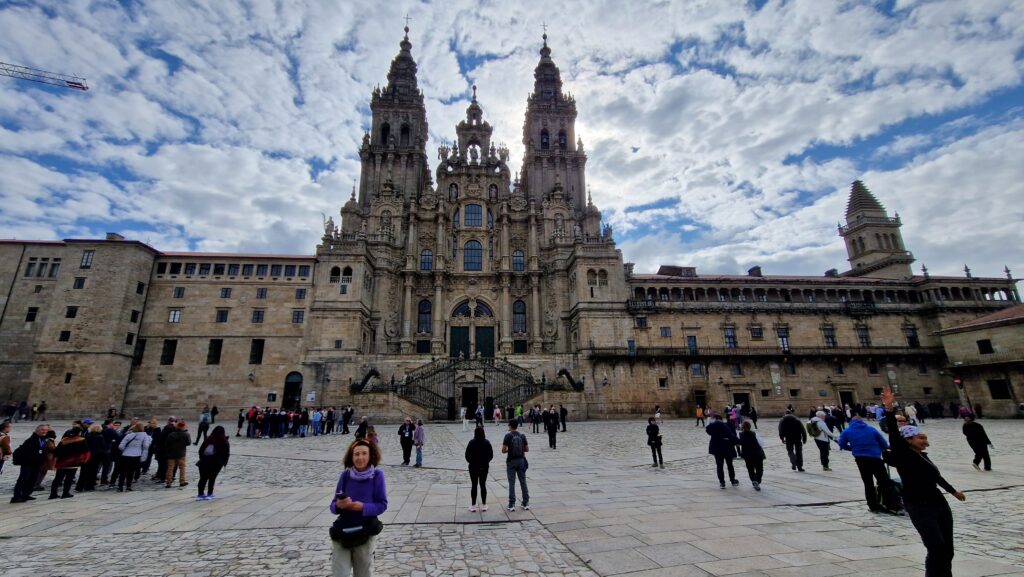

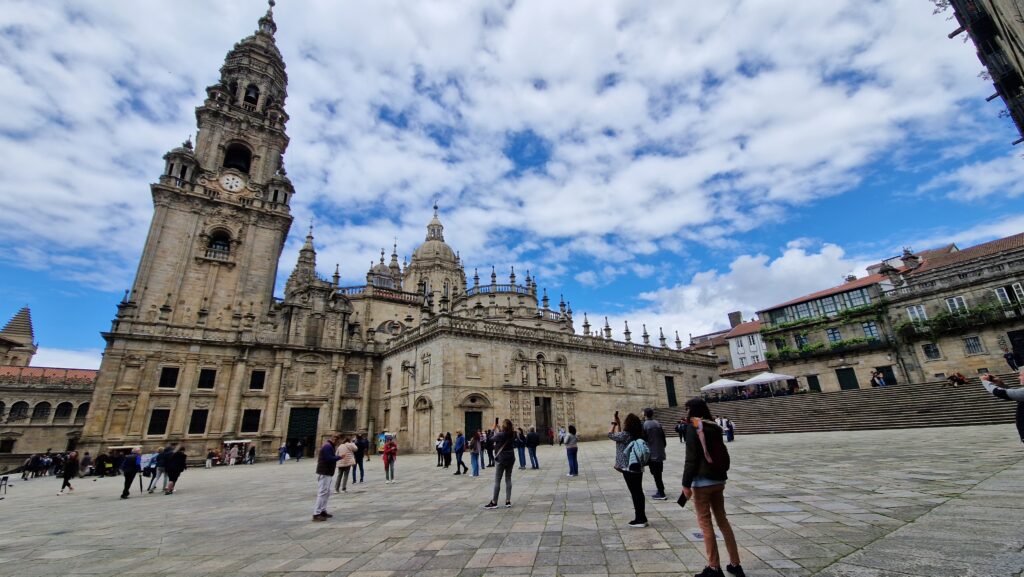
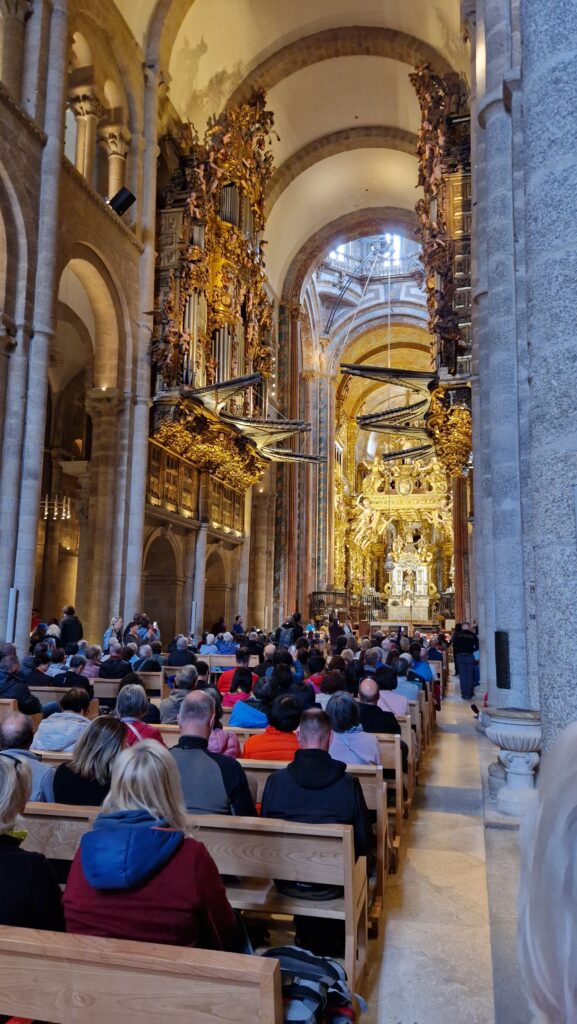
A service was in progress when we walked through the beautiful and huge cathedral – there was standing room only!
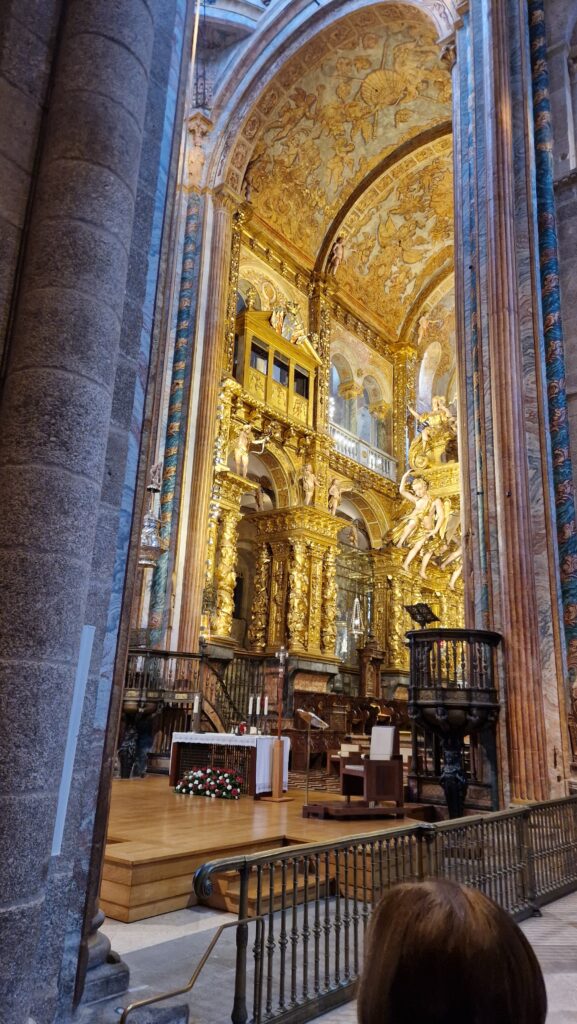
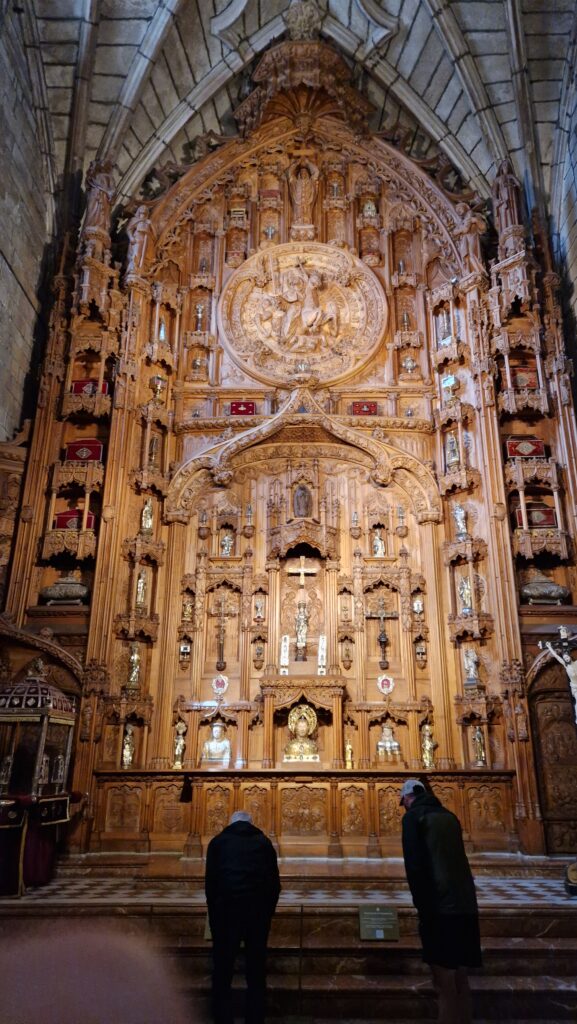
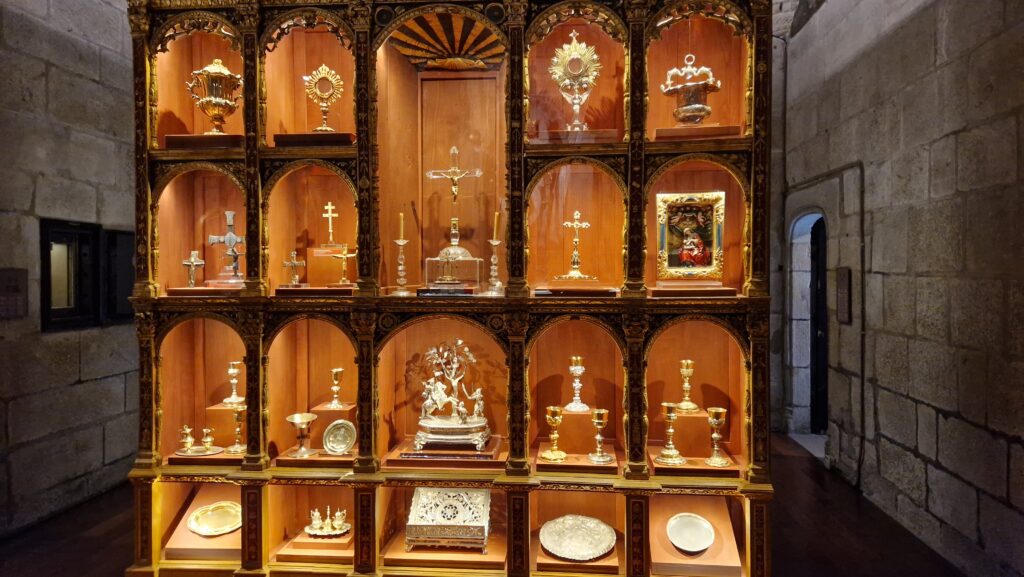
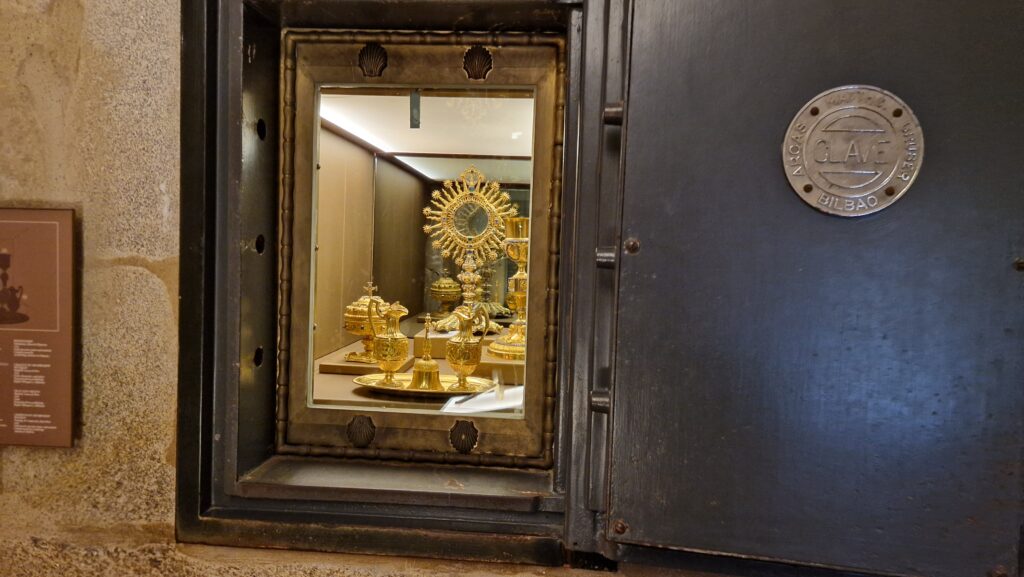
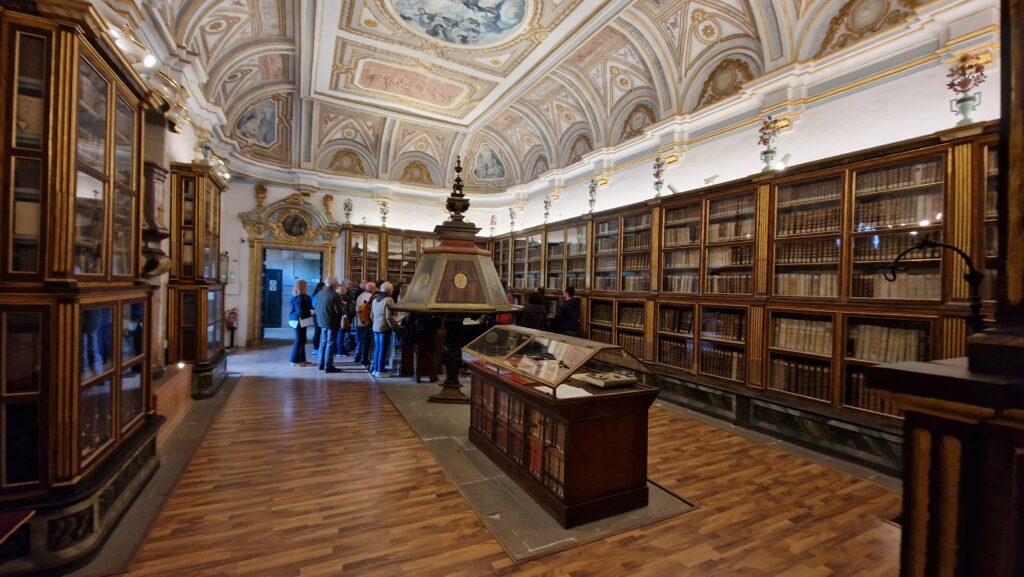
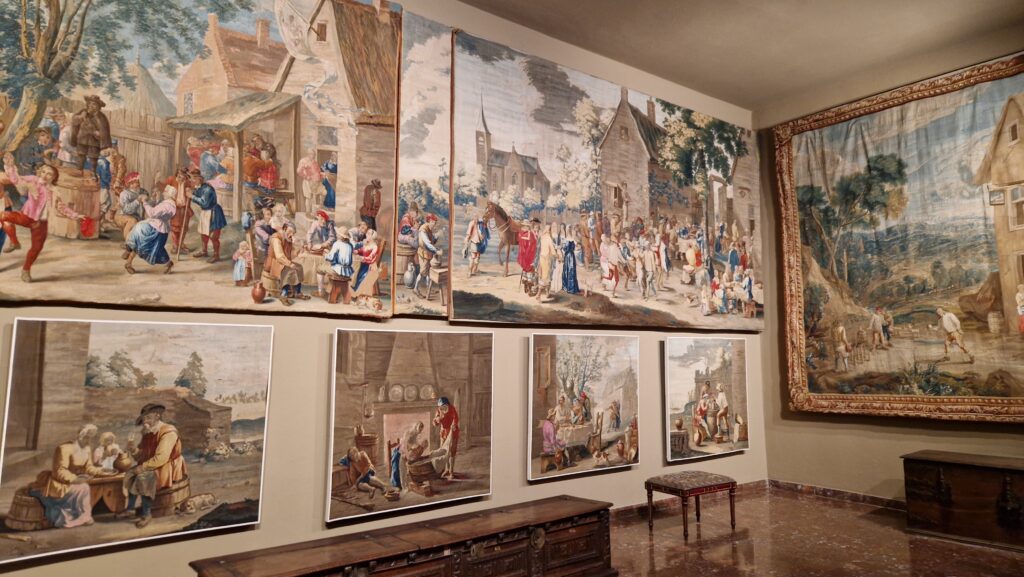
There was a museum in part of the same building which was well woth the visit. It held the Cathedral Treasury, the Chapter Library, a large display of tapestries (some by Rubens) and, most importantly, it claims to hold the remains of St James (Santiago in Spanish)
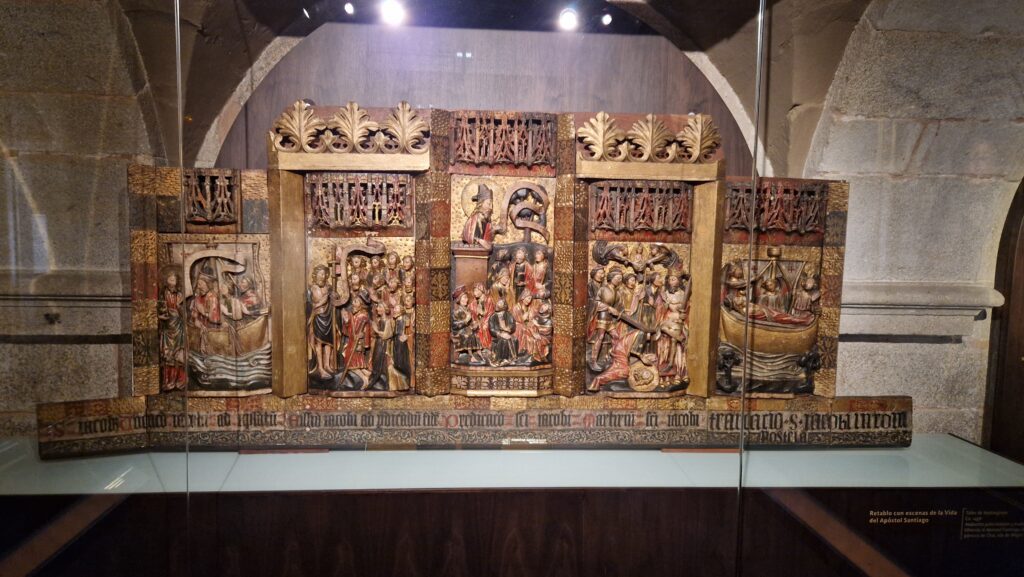
We left Foz the next morning heading for Santiago de Compostela. Rather than take the most direct route we decided to see as much of the impressive coastline as possible. The every turn of the road seemed to bring into view more spectacular bays and beaches.
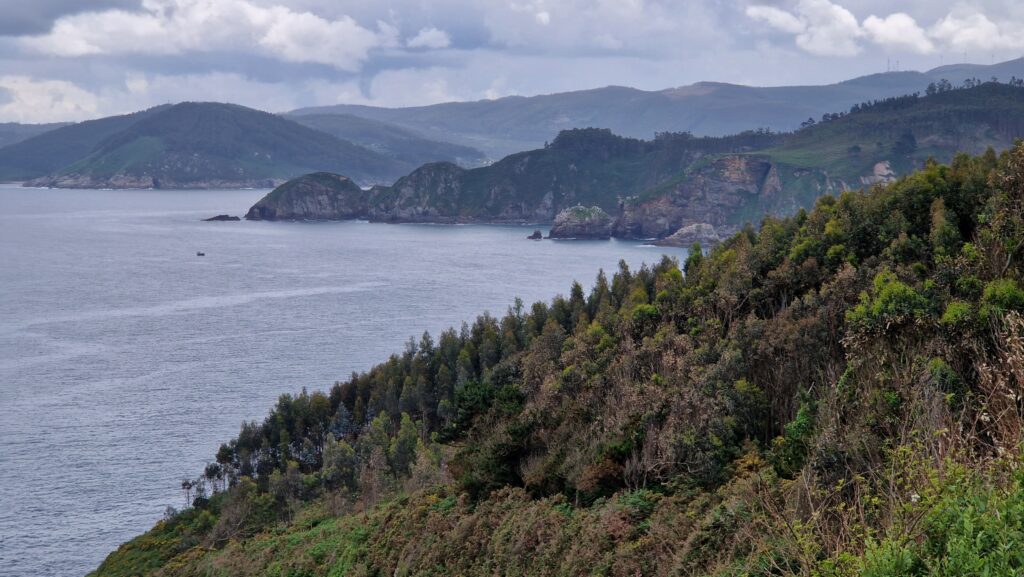
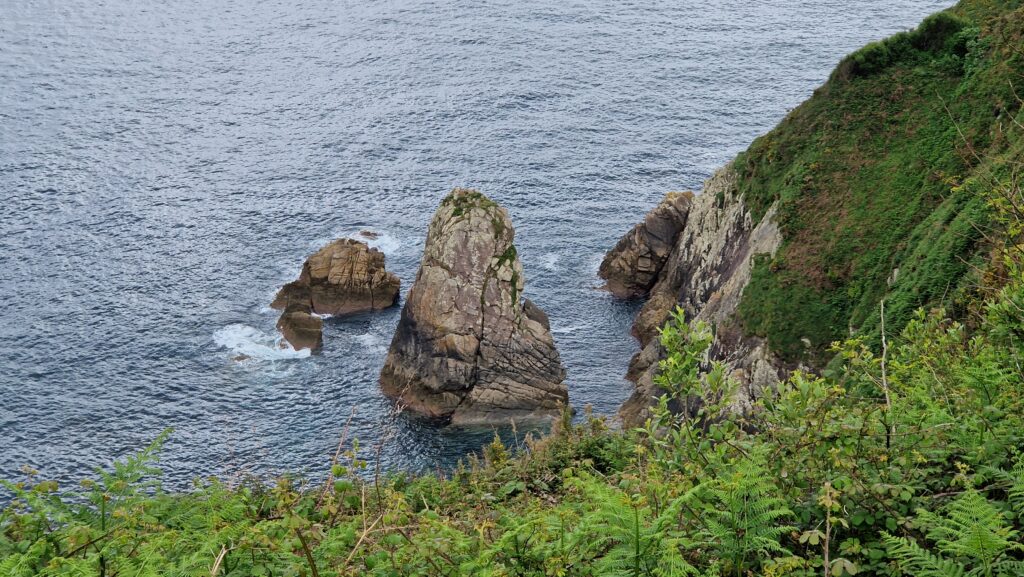
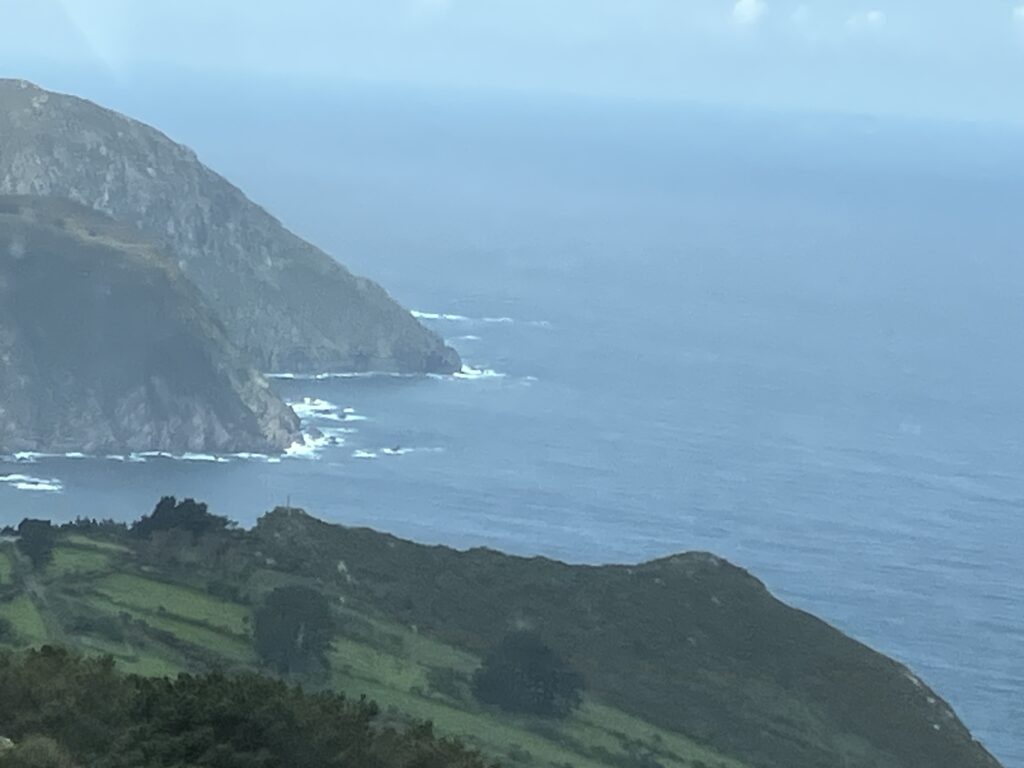
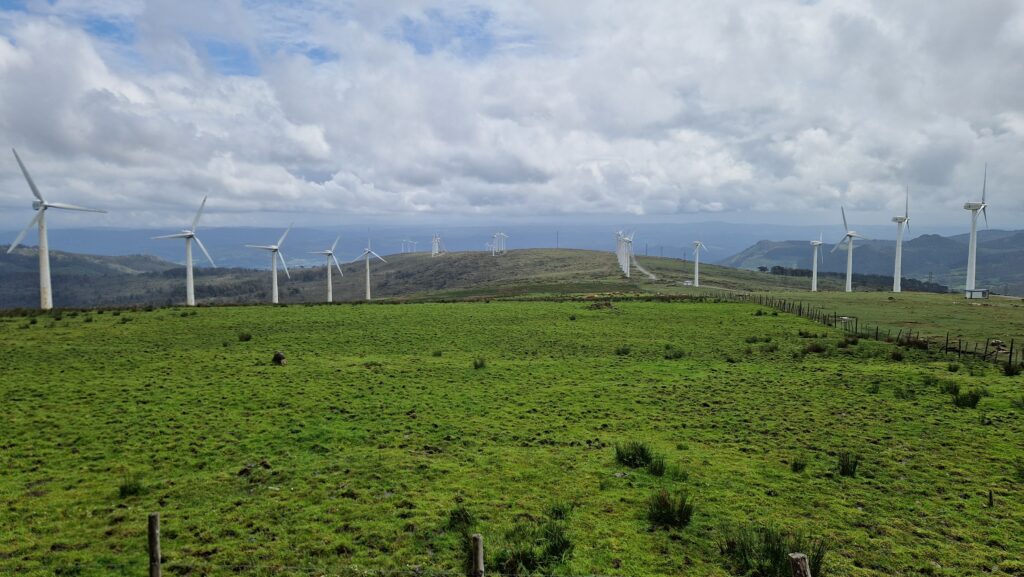
At one point Google Maps decides to direct us on to a single track that seemed to climb up and up. It brought us to Garita de Herbeira, a viewpoint on the highest cliffs in Southern Europe. The peak was covered in wind turbines for good reason! The drive turned out to be a little stressful but certainly worth it for the views.