After a leisurely start we walked into Saintes town centre to see the sights in this very historical town. First stop was the Abbaye aux Dames, a women’s monastery now being used for a music school and an unusual hotel. There was an exhibition of opera costumes as well..
We walked past the Arch of Germanicus built in Roman times (18AD) and then over the footbridge to Saint-Pierre Cathedral stopping en-route for a very tasty lunch.
This was followed by a walk across town to another impressive church – Saint-Eutrope Basilica. There are some famous Romanesque crypts under the building but they had been shut a few days earlier for renovation work🙁. Our last stop was at the Roman Amphitheatre, one of the best preserved in France.
We spent most of our second day driving south, through Alençon, around Le Mans and then down to Angers. We stopped at Camping d’Angers in Lac de Maine on the outskirts of the city.
The following morning we caught a bus from outside the campsite into the city centre and paid a visit to the very impressive Angers Chateau – a huge fortress built in the 13th century to protect the city. The walls are almost half a kilometre long housing 17 towers each about 30 metres high. Inside the walls there is an impressive royal residence and chapel and the moat has been converted to some attractive formal gardens. The biggest draw in the Chateau however is the Apocalypse tapestry, commissioned in 1375 by Louis I, Duke of Anjou. It is 100 metres long and 6 metres high and tells the story of the Book of Revelations, the last text of the New Testament. In 1996 it was rehoused in a new gallery in the Chateau and we would certainly recommend a visit.
After a very pleasant lunch in a restaurant in the centre we took the bus back to the campsite, packed up the van and headed south to Saintes, stopping at the municipal campsite for 2 nights.
Off to France for a three week trip heading initially to Bordeaux for their wine festival (no surprise there!) and then heading roughly in the Dordogne direction – we’ll see how the weather turns out.
After a midday Eurotunnel crossing we’ve driven around to the west side of Rouen to a delightful Aire at La Mailleraye sur Seine. We had seen good reviews online and we were not disappointed. The clue was in the name of the town – the Aire is right on the banks of the Seine and we have been watching plenty of commercial traffic on the river, presumably heading somewhere between La Havre and Paris.
Tomorrow the plan is to head for the west coast – maybe La Rochelle and Ile de Re.
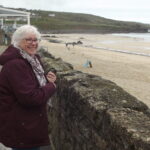
It was time to head back eastwards towards Padstow but en-route we paid a visit to St. Ives. Parking the van at Lelant Saltings Park & Ride(being replaced bt St. Erth P&R in June 2019) we took the very scenic St. Ives Bay Line train into the town. After a wander around the shop we met up with our friend, Helen, at a beach side cafe just in front of the Tate St Ives.
We then drove on to the Padstow Touring Park – a large site with good facilities in walking distance of the town. The next day we spent the day wandering around the town, especially the harbour and had to try out some fish and chips at a takeaway owned by a certain Mr Stein (very nice they were too!).
We broke the journey home with a night spent at the Bath Caravan Park which is situated on the River Avon. We could have taken the nearby Park & Ride bus to the town centre but instead we walked along the riverside to the very pleasant Boathouse pub for some food & drink.
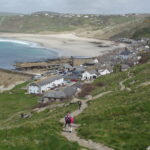
We drove on westwards until we basically ran out of country! Sennen Cove CCC site is a basic but beautifully positioned site on a hillside overlooking the Atlantic coast in one direction and Lands End Airport in the other (not exactly the busiest airport I’ve seen!). It can get a little breezy and we were a little concerned with 60 mph winds forecast but we had no problems,
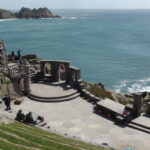
On our first day here we drove to van to the Minack Open Air Theatre. It’s set into the side of a hill with the sea and rocky coastline acting as a backdrop to the stage. Dogs are allowed in during the day but we’re not sure Ruby enjoyed all the steps! We ended the day with drive drive north along the coast to the National Trust’s Levant Mine, a well preserved example on the ‘Tin Coast’ which now has World Heritage Status.
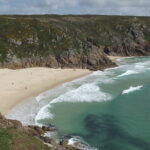
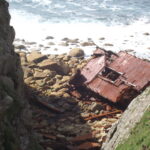
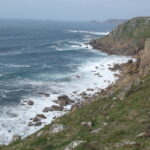
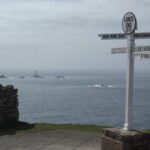
On our second day we decided to walk from the campsite down to the coast and the south along the South West Coast Path, through the town of Sennen Cove, past genuine shipwrecks to Land’s End itself. Yet again the views from the path were spectacular. Land’s End itself is very commercialised but the surrounding landscapes are very impressive with views out to the Longships Lighthouse. To save Ruby’s legs (and ours!) we took the bus back to the campsite.
Drove down through Truro and Helston to the National Trust campsite at Teneriffe Farm, Mullion. It’s a small but well positioned site with a new shower block. We took the 15 mins walk to the coast and then along the cliff tops of the South West Coast Path north to Mullion Cove – a tiny fishing harbour. The views on the walk were superb.
One of the main attractions of this site is that it has direct access to the Lost Gardens of Heligan. We spent several hours wandering through the 200 acres of these very impressive gardens (and their excellent farm shop too!).
The story of this estate is legend – originally owned by the Tremayne family and at it’s peak in the late 19th century, it fell into disrepair after World War I and remained overgrown and neglected until the 1990s when it was discovered and restored by a team led by Tim Smit – who was also responsible for the nearby Eden Project.
After an pleasant overnight stop at a Britstop pub in Somerset (just off the M5) the three of us (Ruby included) headed initially to Lanhydrock, a National Trust house near Bodmin. Ruby wasn’t allowed in the house so we walked around the woods on the estate which had plenty of flowers such as bluebells in full bloom.
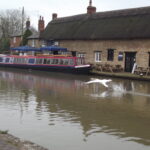
Off for the weekend with Ruby to the Home Farm CMC CL at Stoke Bruerne. It’s a beautifully positioned site right next to the Grand Union Canal. The ground was too wet to park on the grass but fortunately there was enough hardstanding for 3 or 4 vehicles.
The scenic village is very small and was split in two when the canal was built but we are pleased to report there are two good pubs and an Indian restaurant!
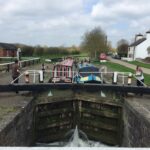
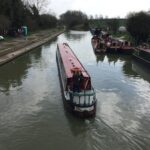
We went for a walk along the canal – watching the rental boats having fun and games getting through the locks!
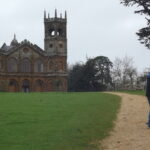
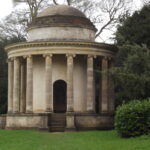
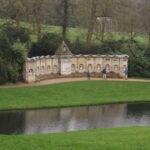
On our way home we stopped at Stowe. The House, parts of which date back to 1683, looks very impressive and is now used as a private school. In the 18th century Viscount Cobham spent a huge amount of time, effort and money creating spectacular garden full of lakes, arches and follies. Over time the grounds became run down and were eventually handed over to the National Trust in 1989. The trust has done an incredible job restoring the gardens to their former glory and we would certainly recommend a visit.
For our first trip of 2018 we decided on a long weekend trip to the Canterbury CCC site.
We were very lucky with the weather – a rare sunny weekend in between the many snow showers of the winter.
We drove down on Friday (16/2), found the site just to the east of the town centre and found a nice pitch near the entrance.
The site was about 20 mins walk from the town centre or a short bus ride. We wandered in with Ruby and our first stop was at St Martins church , the oldest church in continuous use in the English-speaking world. Parts of the building date back to Roman times.
Canterbury is where Christianity was first established in the UK. It was brought here in the 6th century by a french princess called Bertha who eventually married the Anglo Saxon King Ethelbert. Here are the statues of them keeping an eye on the city:
A few years later Augustine, a monk from Rome arrived, based himself at St Martins and set about spreading the word. With the support of the King he built the Abbey (almost next door to St Martins) and eventually the Cathedral which is the centrepiece of the city today.
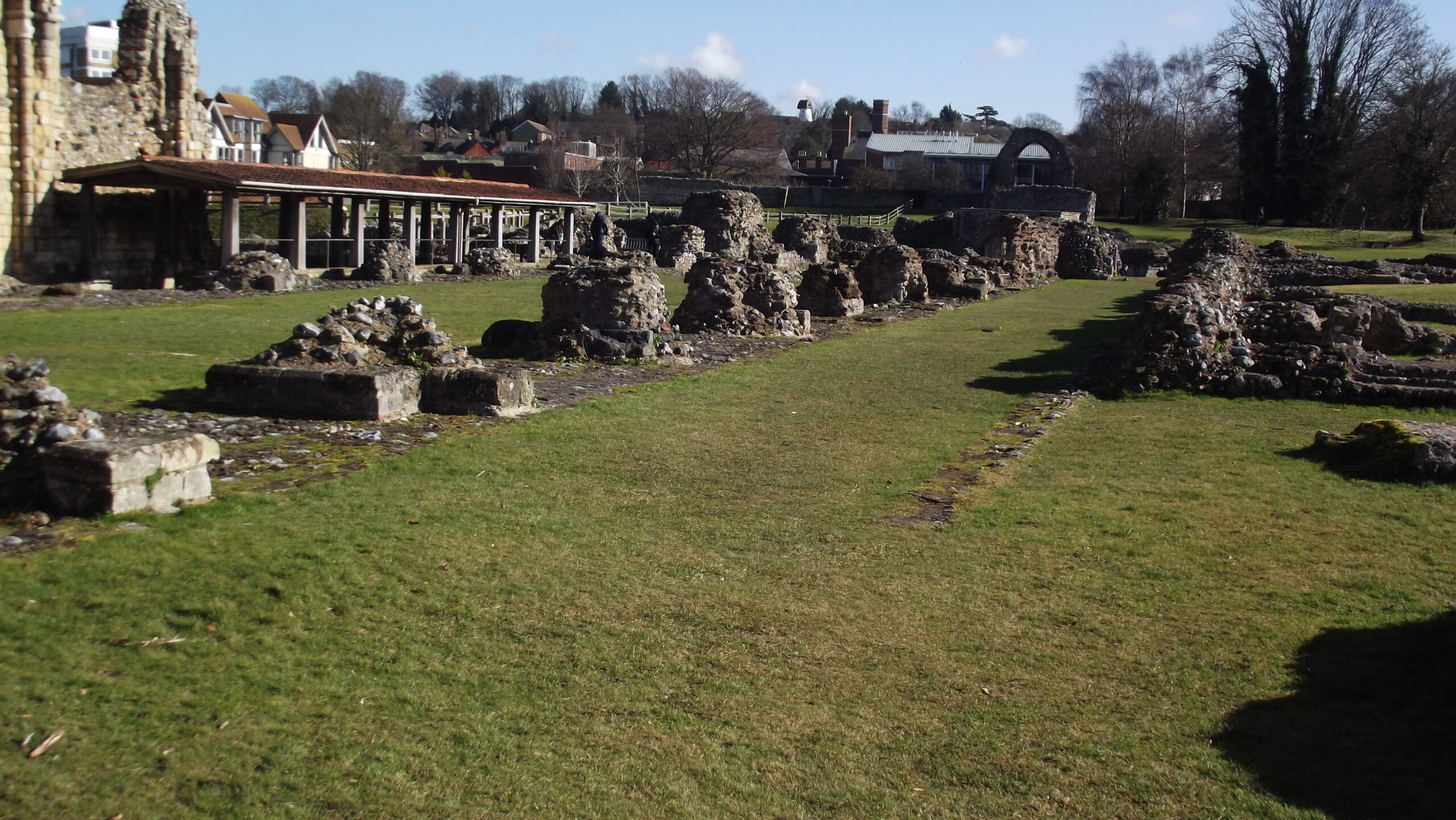
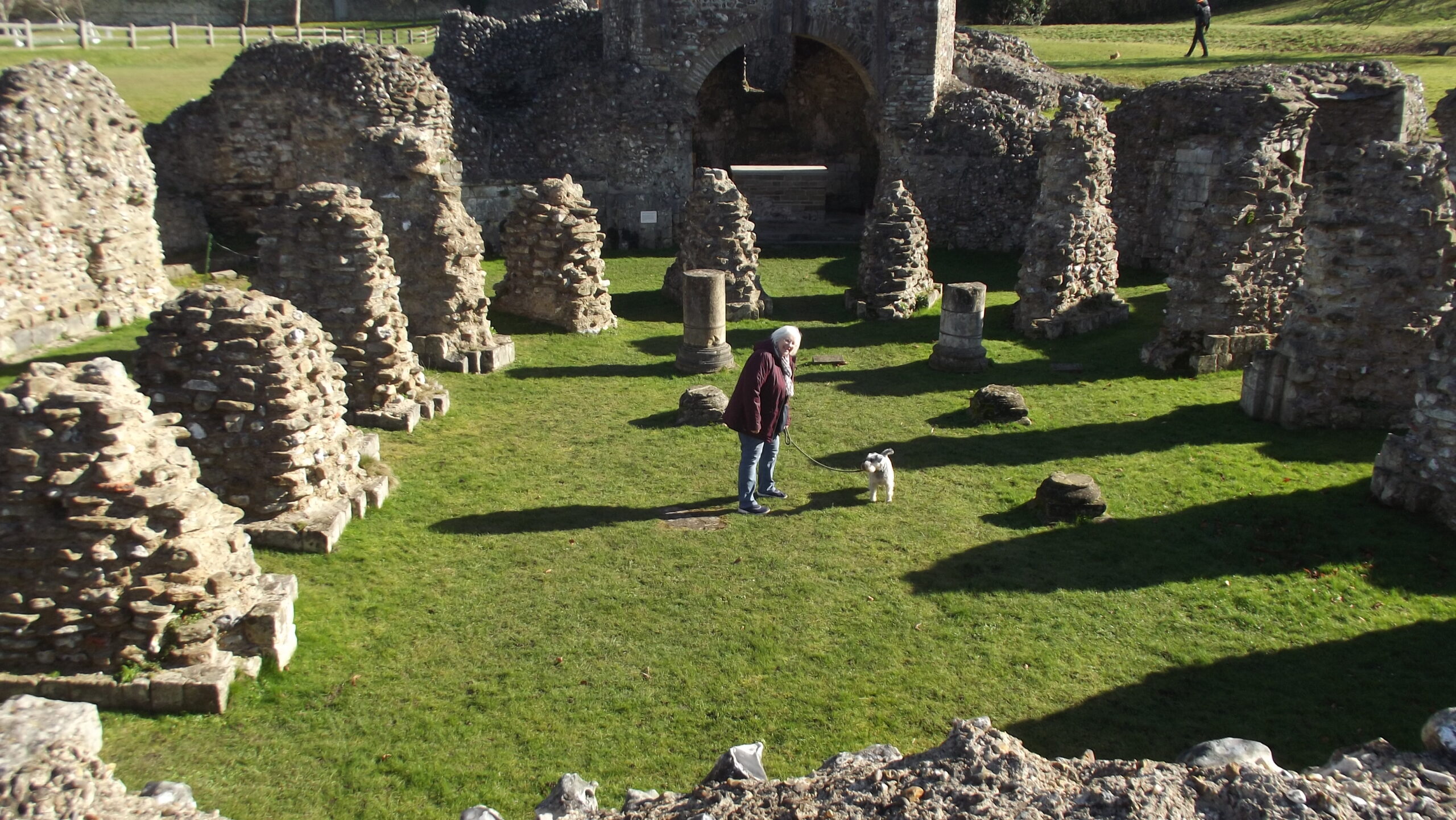
All these building are part of a World Heritage site. Our next stop was at the ruins of the Abbey now managed by English Heritage (and fortunately dog friendly!).
After this we continued into the town centre which is full of interesting historic buildings and unusual shops (and pubs!).
We decided that visiting the cathedral itself would be a challenge with Ruby and also quite expensive so we’ll save that for another visit.
The following day we took a walk along the walls of the city which provides some excellent views.
We’d certainly recommend the site and city for a short break and would be happy to go back in the not too distant future.