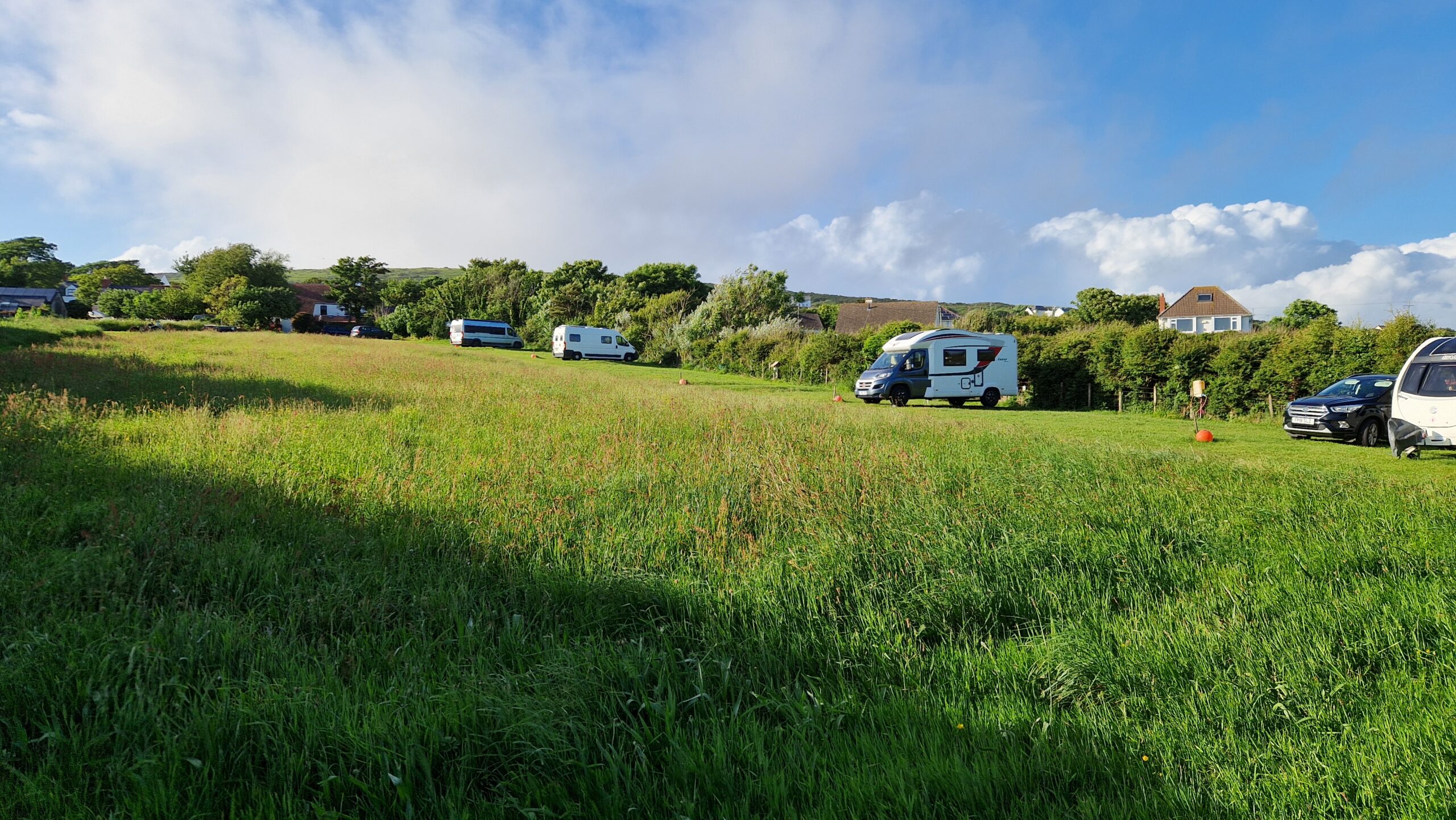
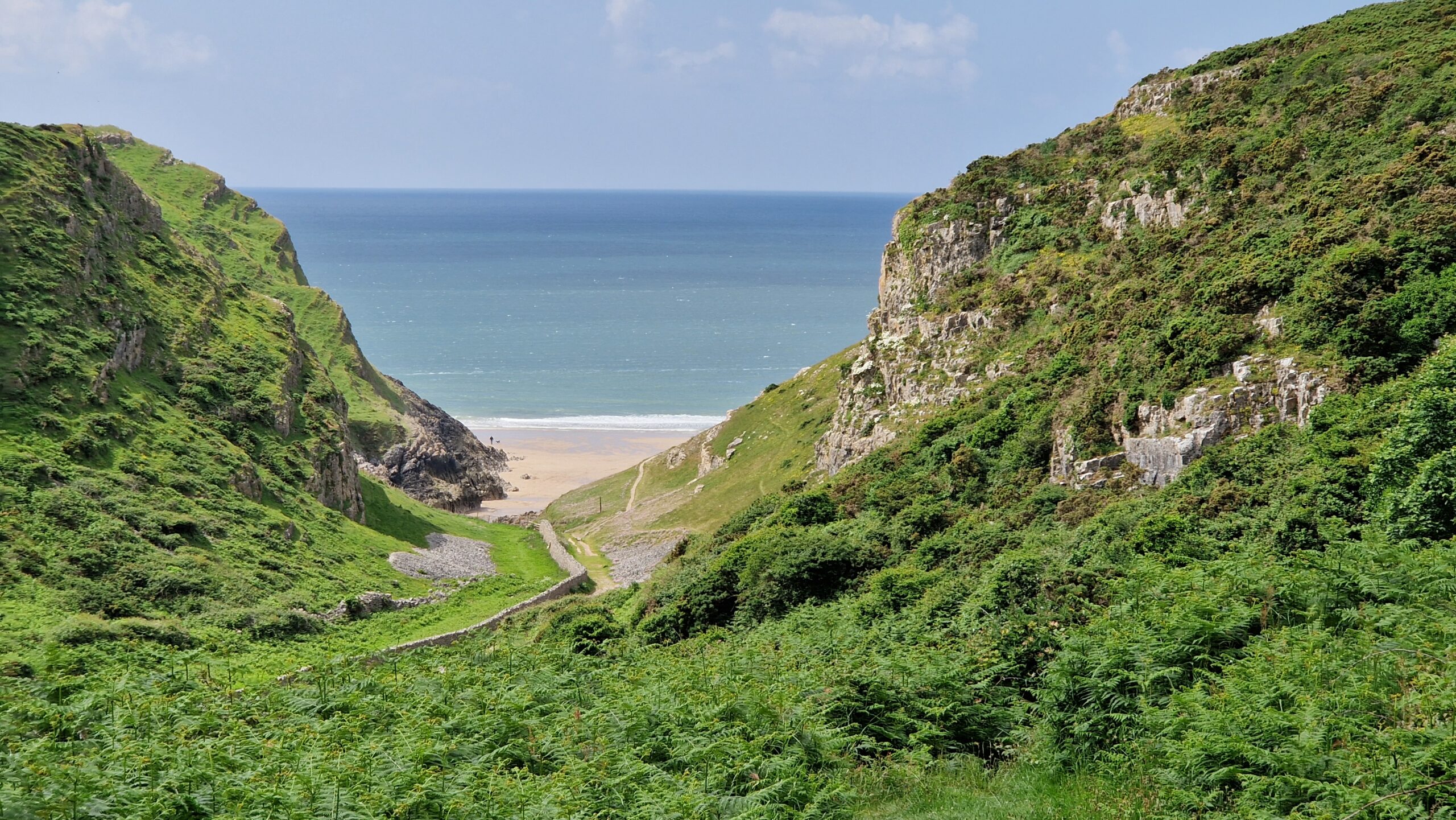
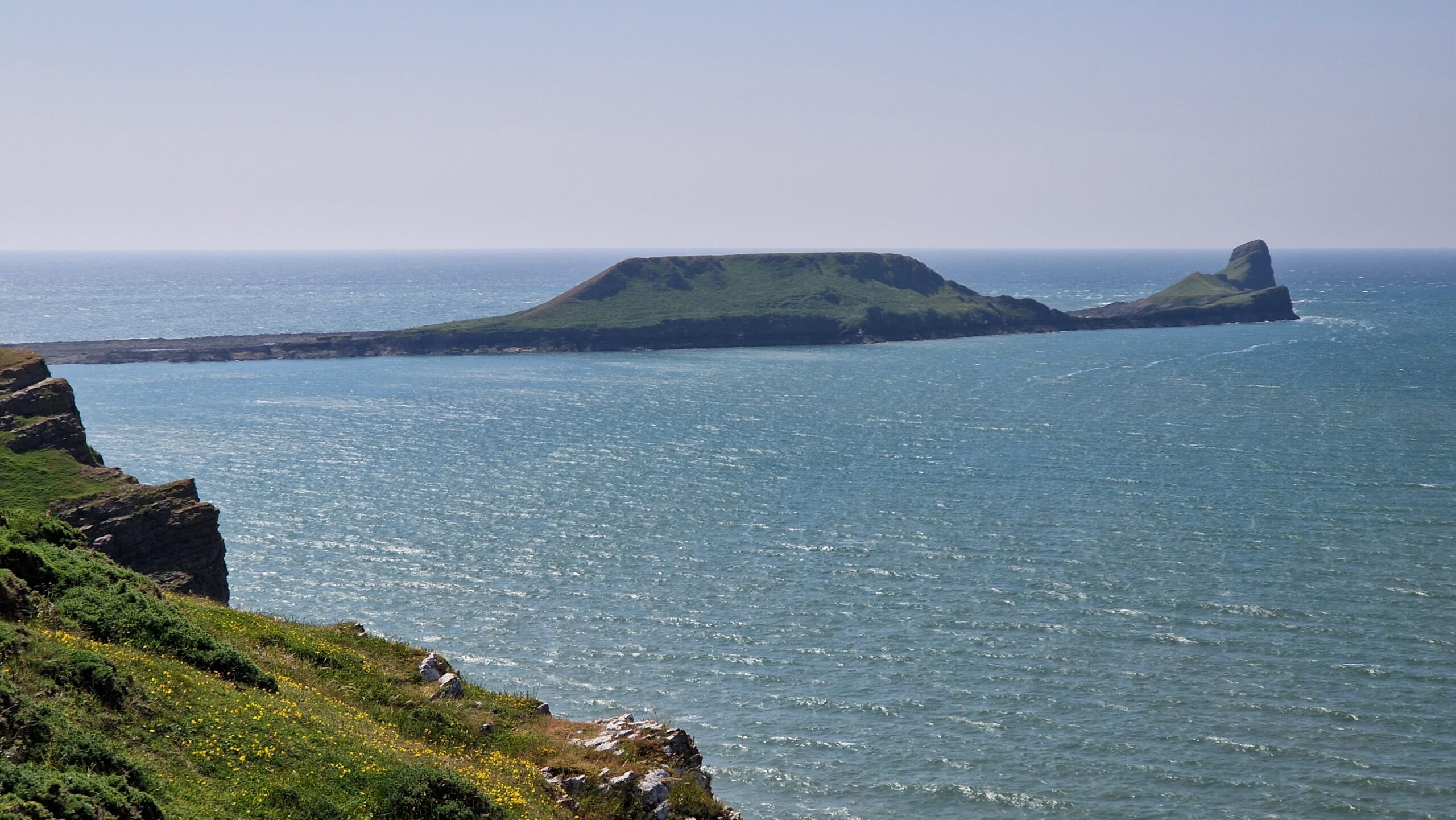
From the bottom of our campsite you can see down to Mewslade Bay which is at the western tip of the Gower.
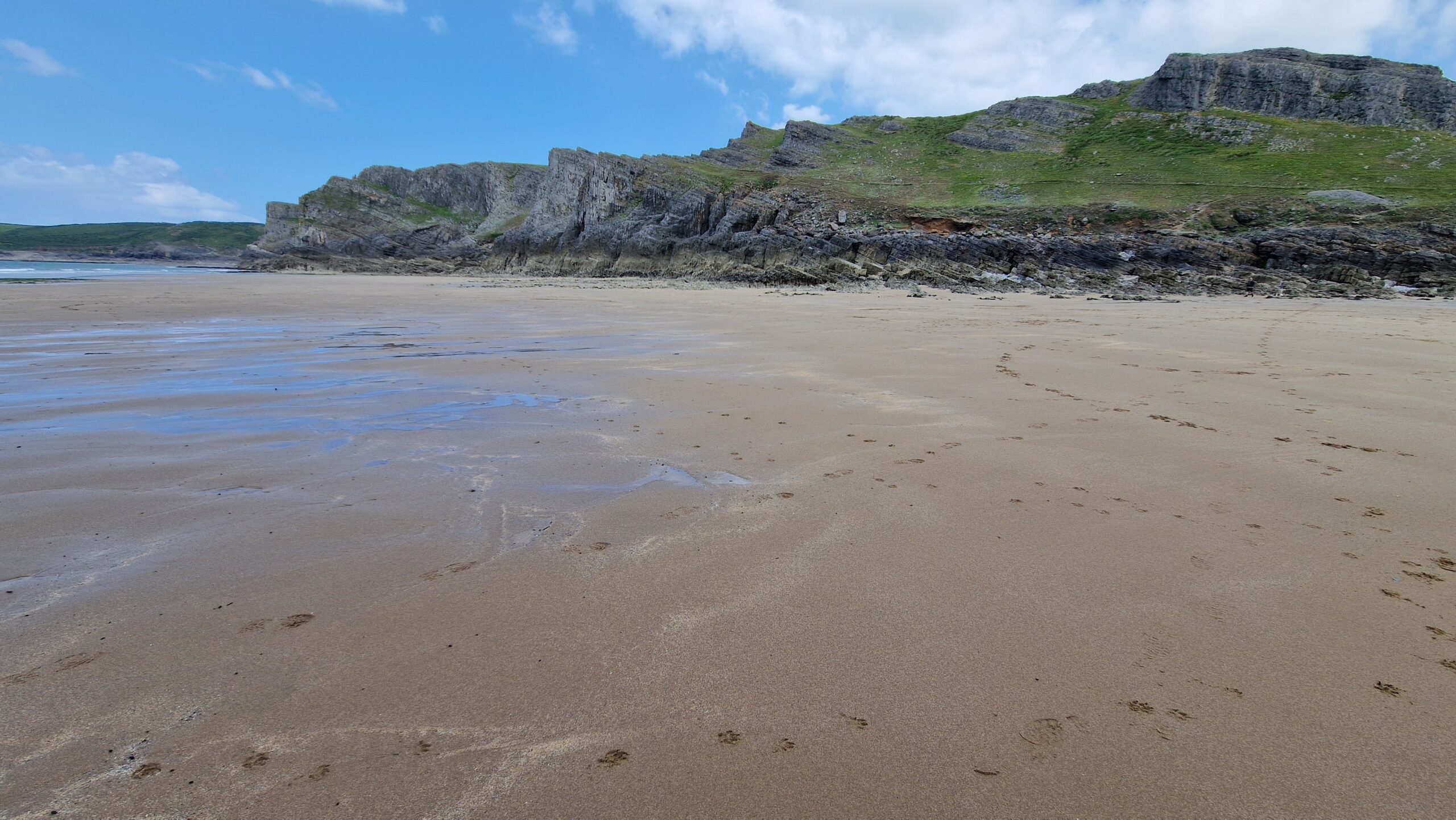
In the morning, I ventured down a rather steep rocky path to the bay,crossing the Wales Coast Path on the way. It’s a very attractive isolated sandy beach, surrounded by rocky outcrops with fascinating erosion patterns at the base of the cliffs.
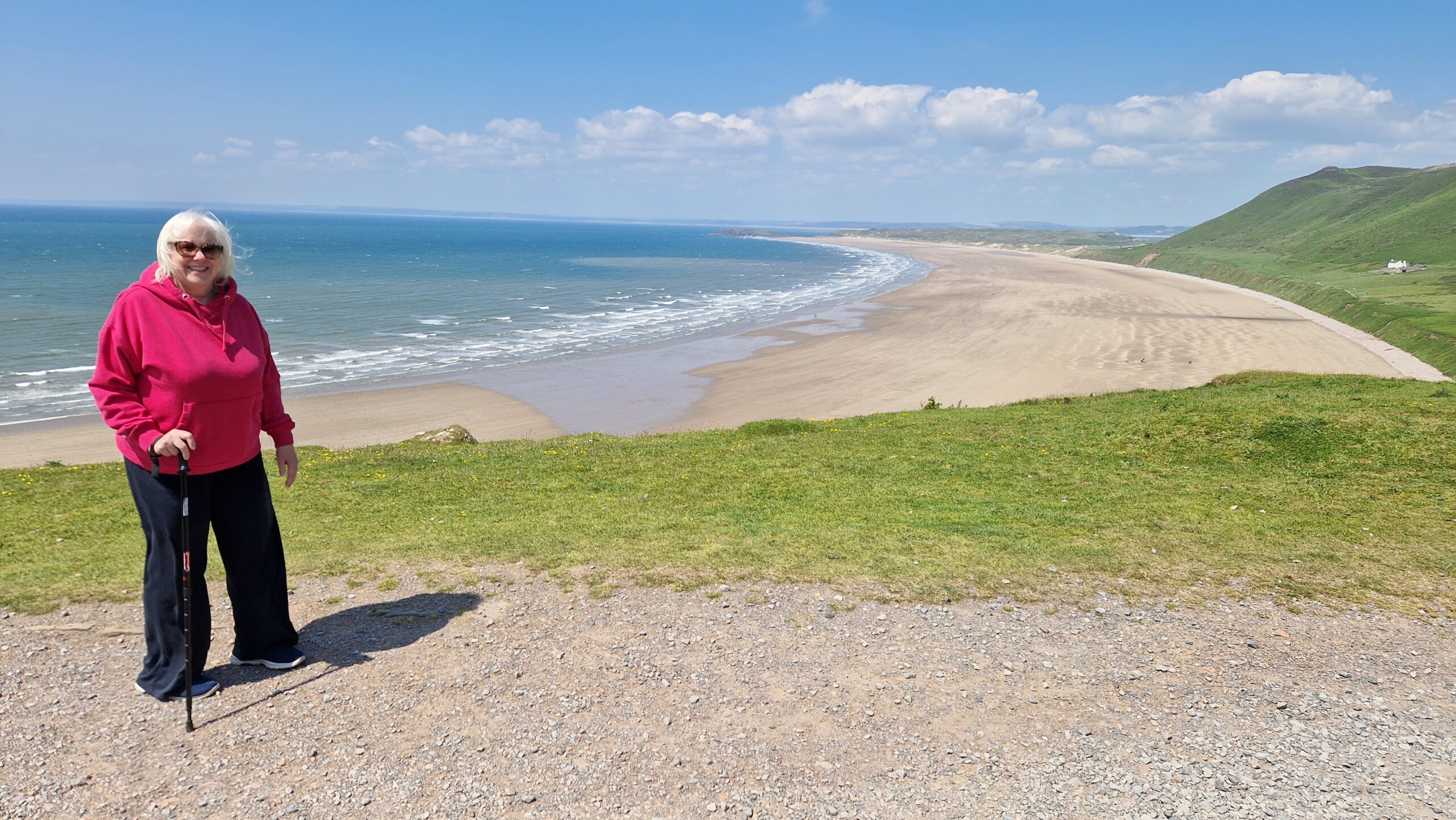
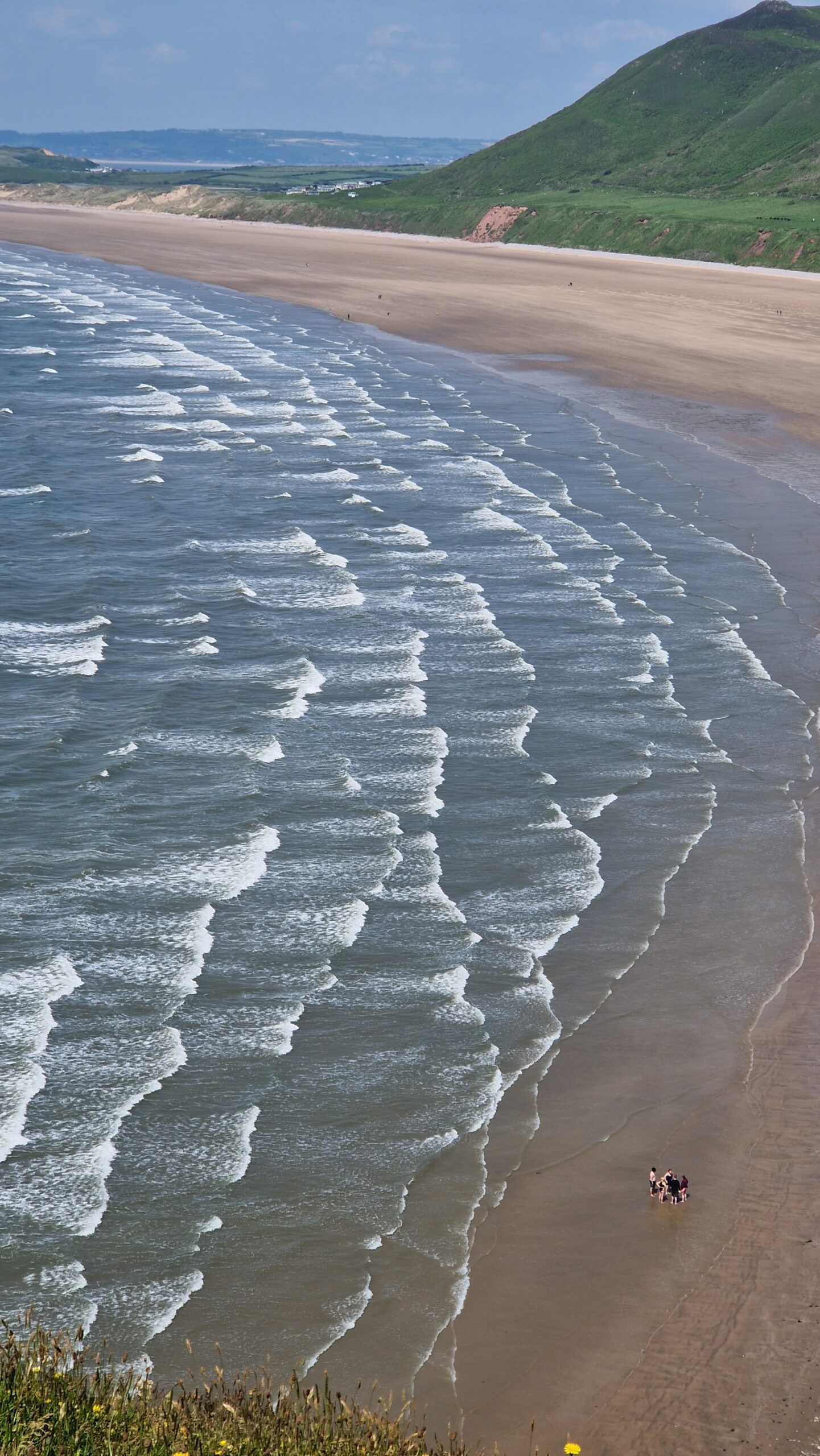
For lunch we walked to an excellent Cafe in Rhossili called The View. The view in question was over the enormous Rhossili Bay beach which is rated as one of the best beaches in the world! This beach and the surrounding coastline is managed by the National Trust and is quite spectacular.
It’s been quite a while since our last major motorhome tour but now we are heading off for most of June on a trip around the coast of Wales.
First stop – the Six Counties CL at Nant Y Moor Park, just outside Newport.
We had the site to ourselves but I imagine it could get frequently get noisy during the day as the park houses a large clay pigeon shooting facility!
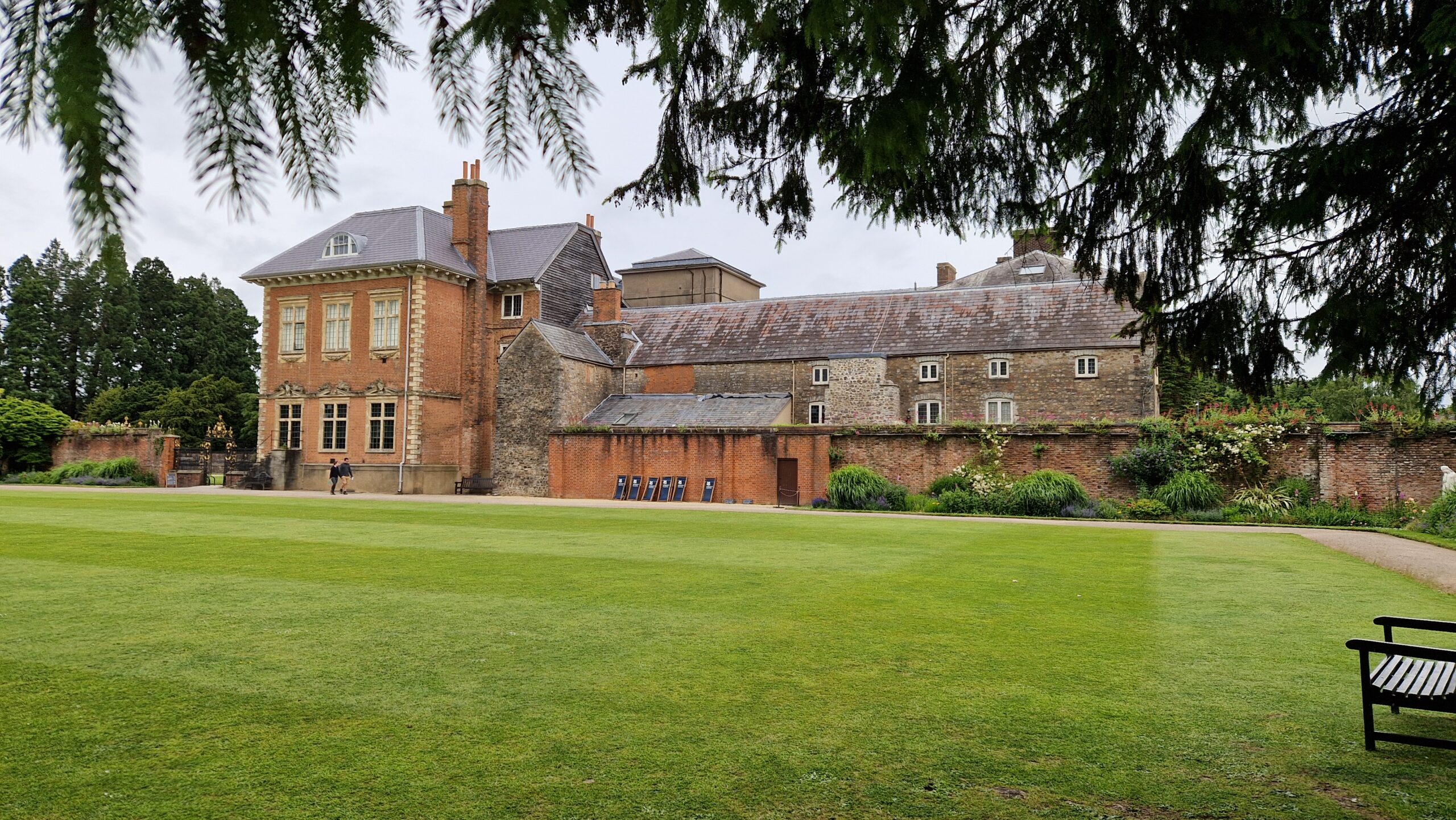
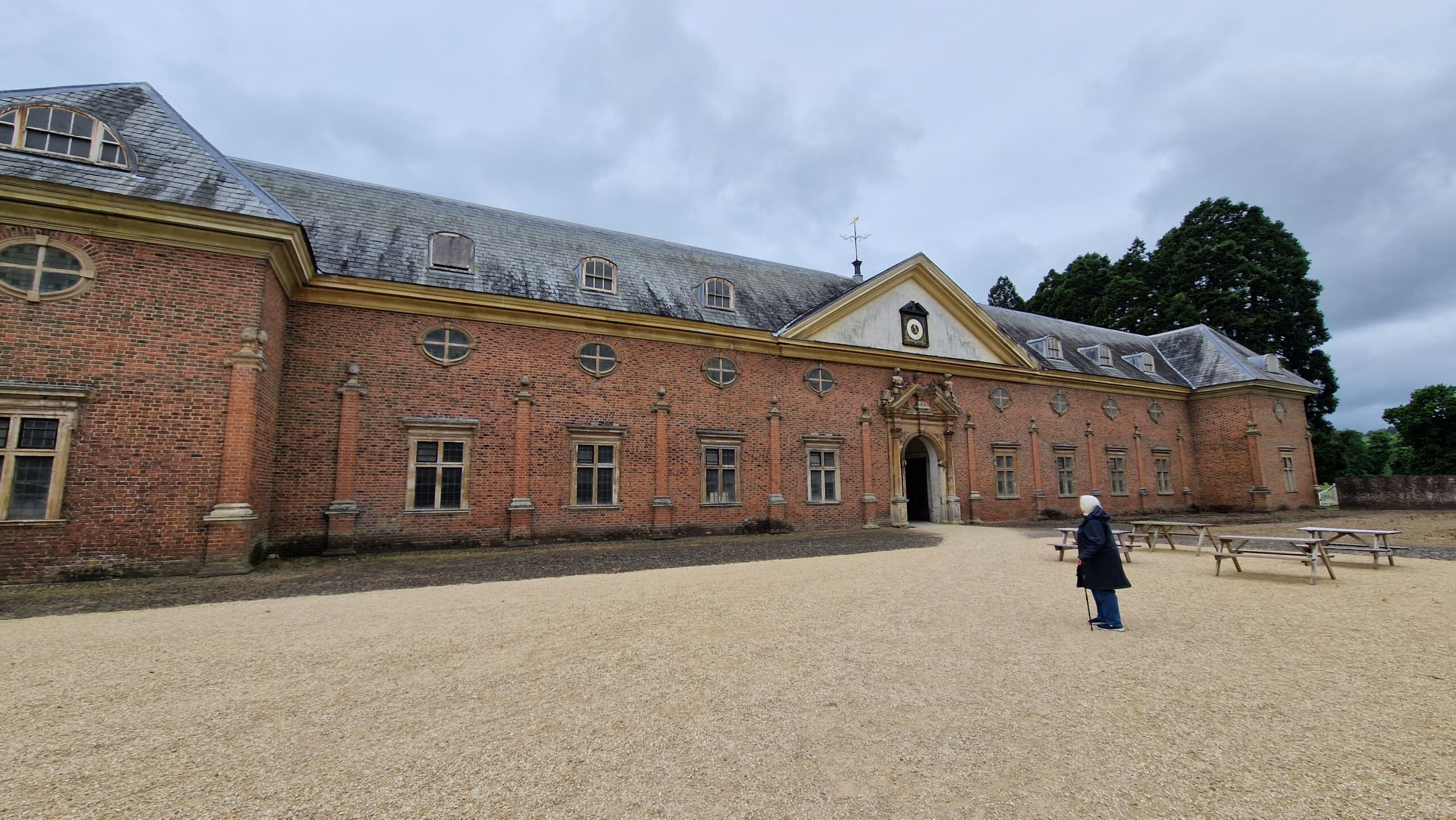
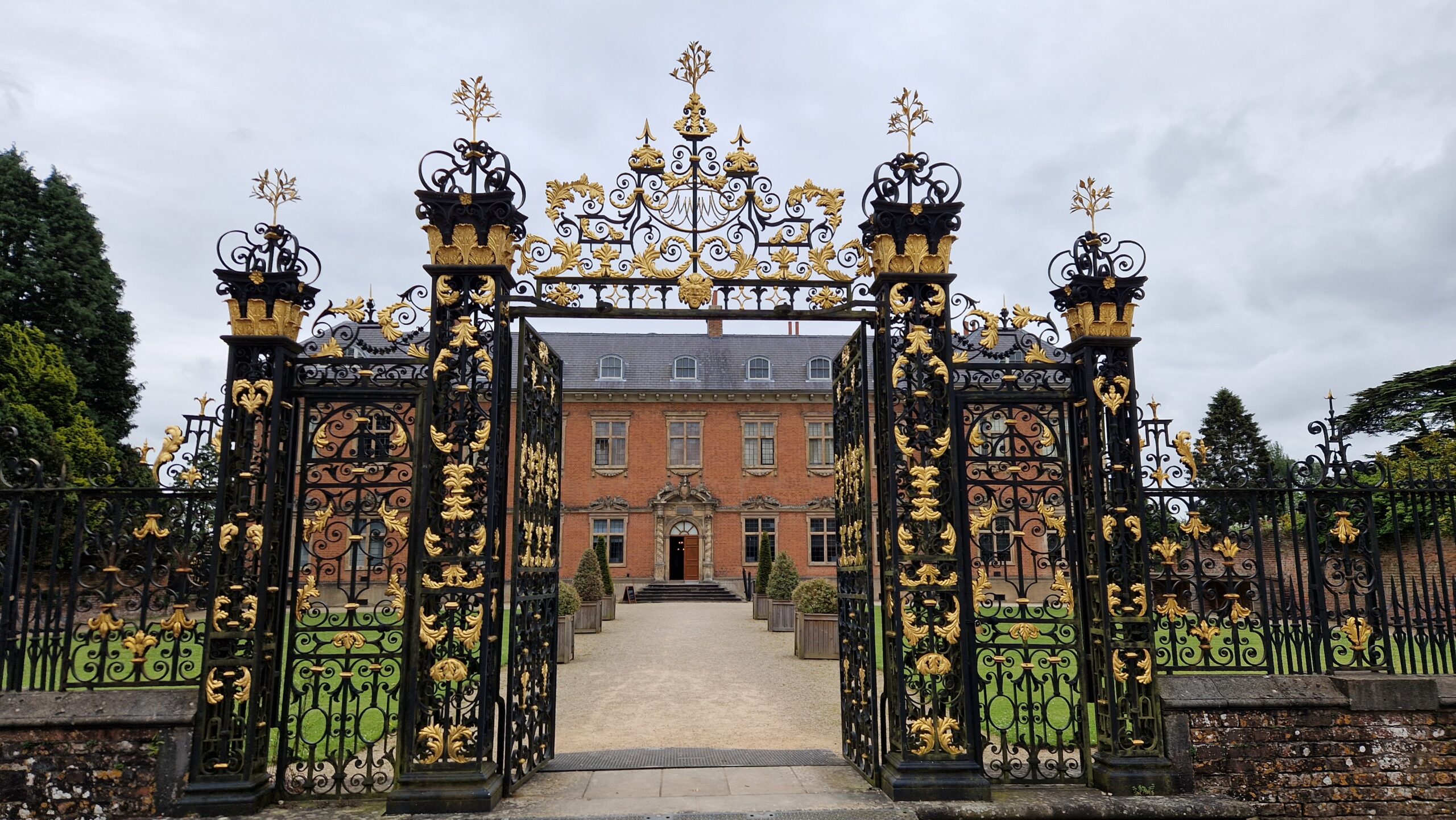
We visited two attractions the following day. First, Tredegar House, a National Trust property in Newport. It is one of the most significant late 17th-century houses in the whole of the British Isles. For more than 500 years the house was home to one of the greatest Welsh families, the Morgans, later Lords Tredegar. The Morgan family owned more than 40,000 acres in Monmouthshire, Breconshire and Glamorgan at the end of the 18th century. Their lives impacted on the population of south-east Wales socially, economically and politically and influenced the heritage of the area. As well as the house, the stables and entrance gate were paticularly impressive.
The Stables
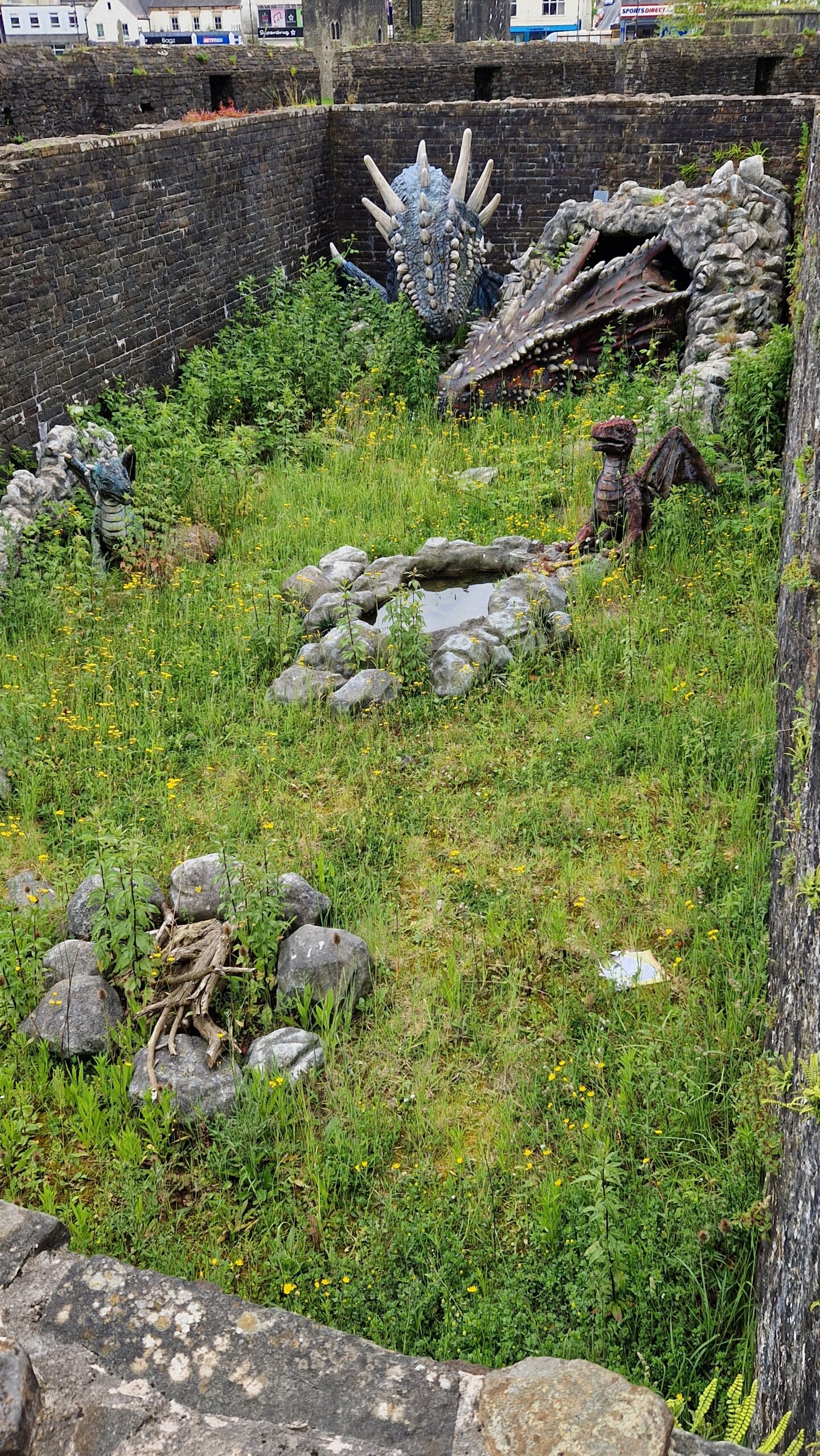
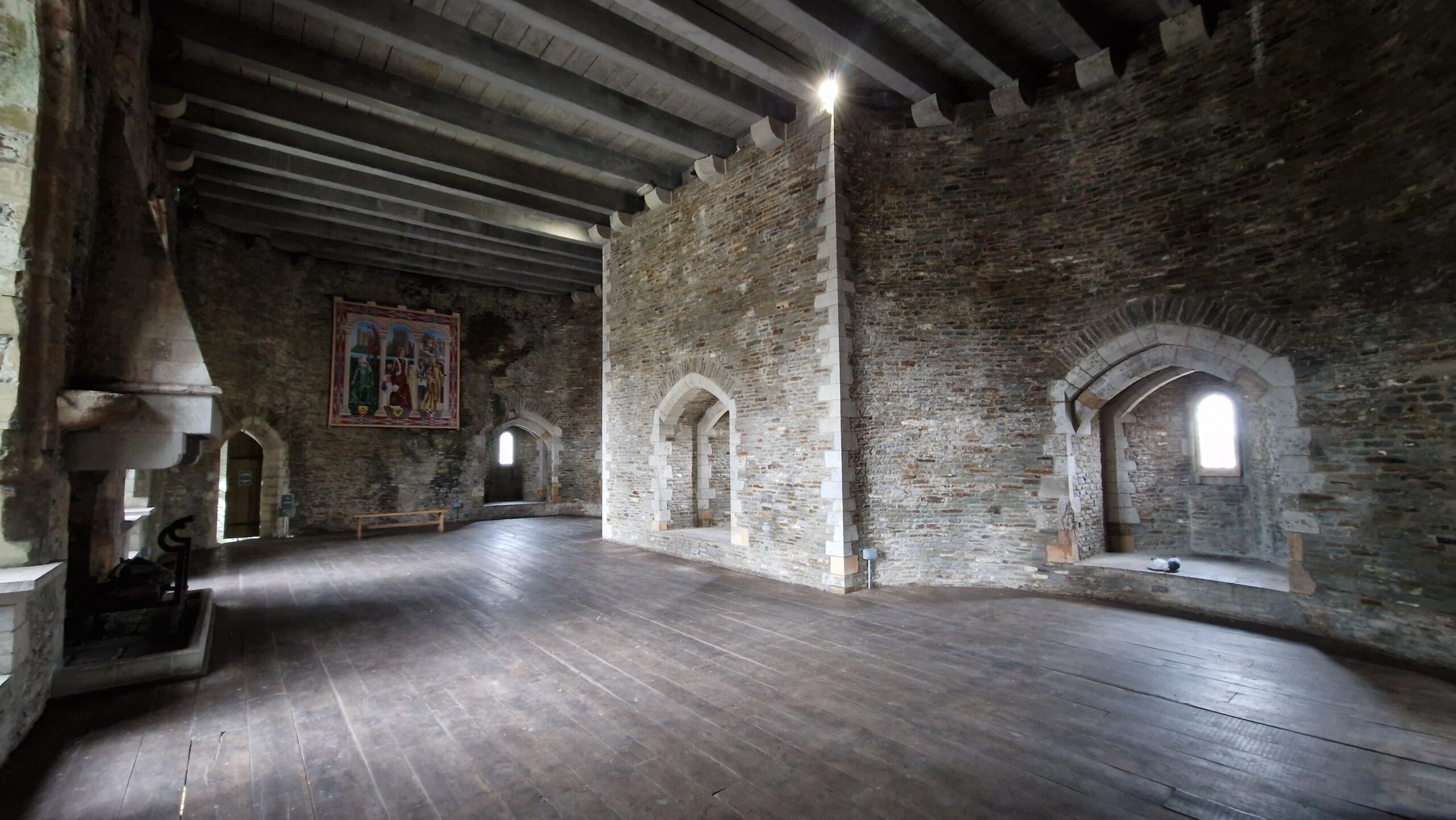
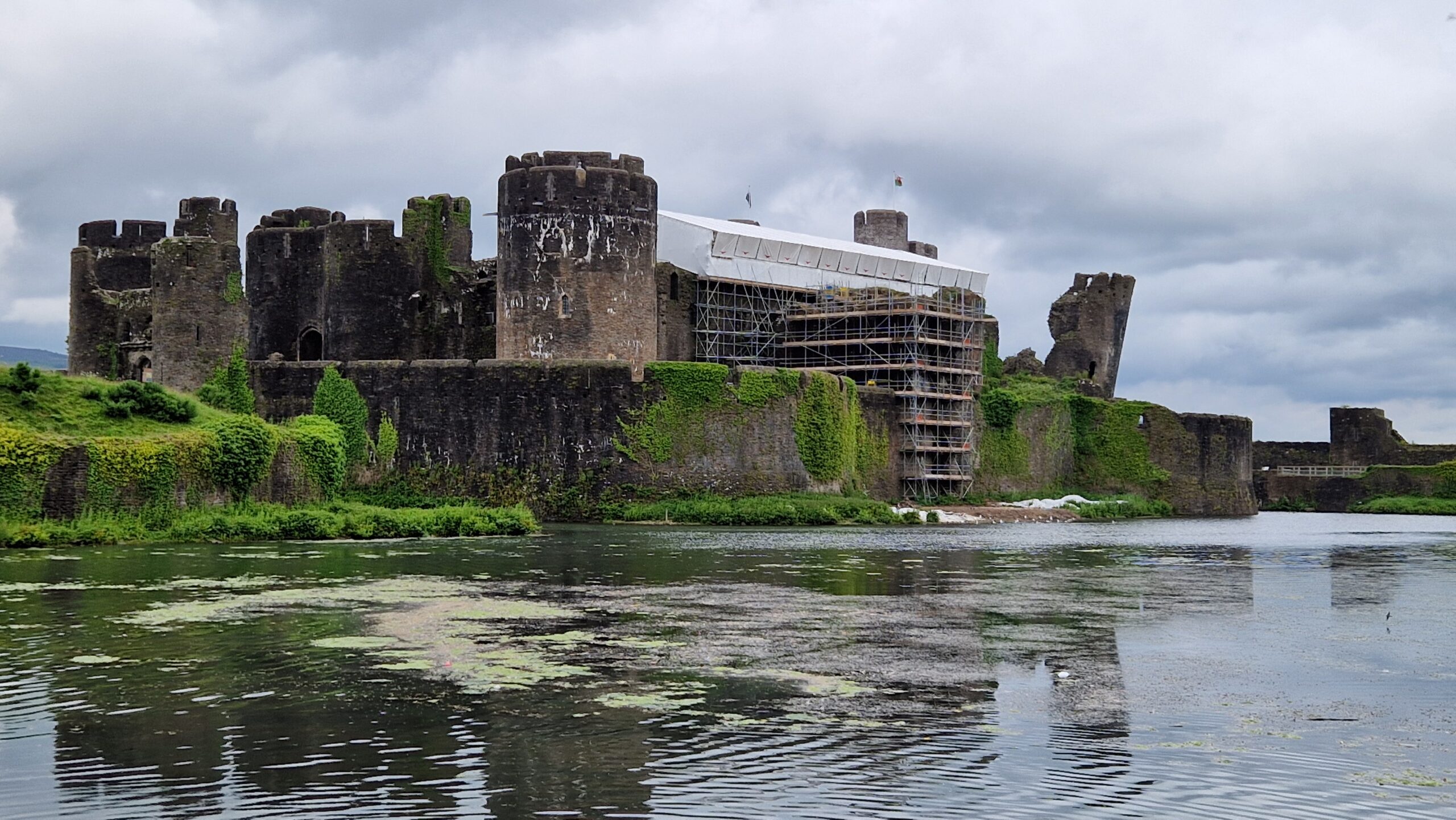
That afternoon we moved on to Caerphilly, the home of the largest castle in Wales, second in the UK only to Windsor. Built in the 13th century the site covers a total of 30 acres. During the Civil War, a gunpowder explosion in the south-east tower left it leaning precariously over the lake – but no sign of it collapsing yet! The castle’s upkeep has been neglected for some time but a new major project is under way to redevelop much of it’s internal structure. Unfortunately this meant we were unable to visit some of the most interesting parts of the site, such as the Great Hall, which was rather disappointing (although I did quite like the dragon pit!).
Beware dragons!
We ended the day by driving out to the far end of Gower Peninsular to our next campsite, the Mewslade View CL, just outside Rhossili.
On the 14th we drove back up to the aire at Arras so we were within easy reach of Calais for our crossing the following day. At the supermarket, a sign reassured shoppers that it was still open, which we thought was a little odd for a Friday! We then realised it was Bastille Day, a national holiday in France! Sure enough there were various events going on in the town. We walked though a square where music and dancing were in full swing. There was also this rather unusual nautical variant of jousting taking place on the river (click below to play the video):
We had time to visit the city centre and had booked a recommended restaurant for our last meal of the holiday.
On the 13th we drove north west, in and out of Belgium again, to an aire at the french resort of ValJoly situated on a beautiful lake in the Avesnois National Park. The aire had superb views over the lake and was about 10 minutes walk away from the centre of the resort with it’s shops, cafes and accommodation. There was a sailing centre and campsite further around the lake. The best feature of our location (apart from the view) was that it was close to the site’s stables and there was a regular column of children on horses or ponies passing front of the van.
On the 11th we left Germany and headed west through Luxembourg (cheap diesel!) and the corner of Belgium to Charleville-Mézières, regarded as the capital of the French Ardennes. We parked for two nights at the Aire by a marina on the River Meuse. The site was very well equiped and positioned but did suffer a little from loud music late at night from the youths who gathered at the marina.
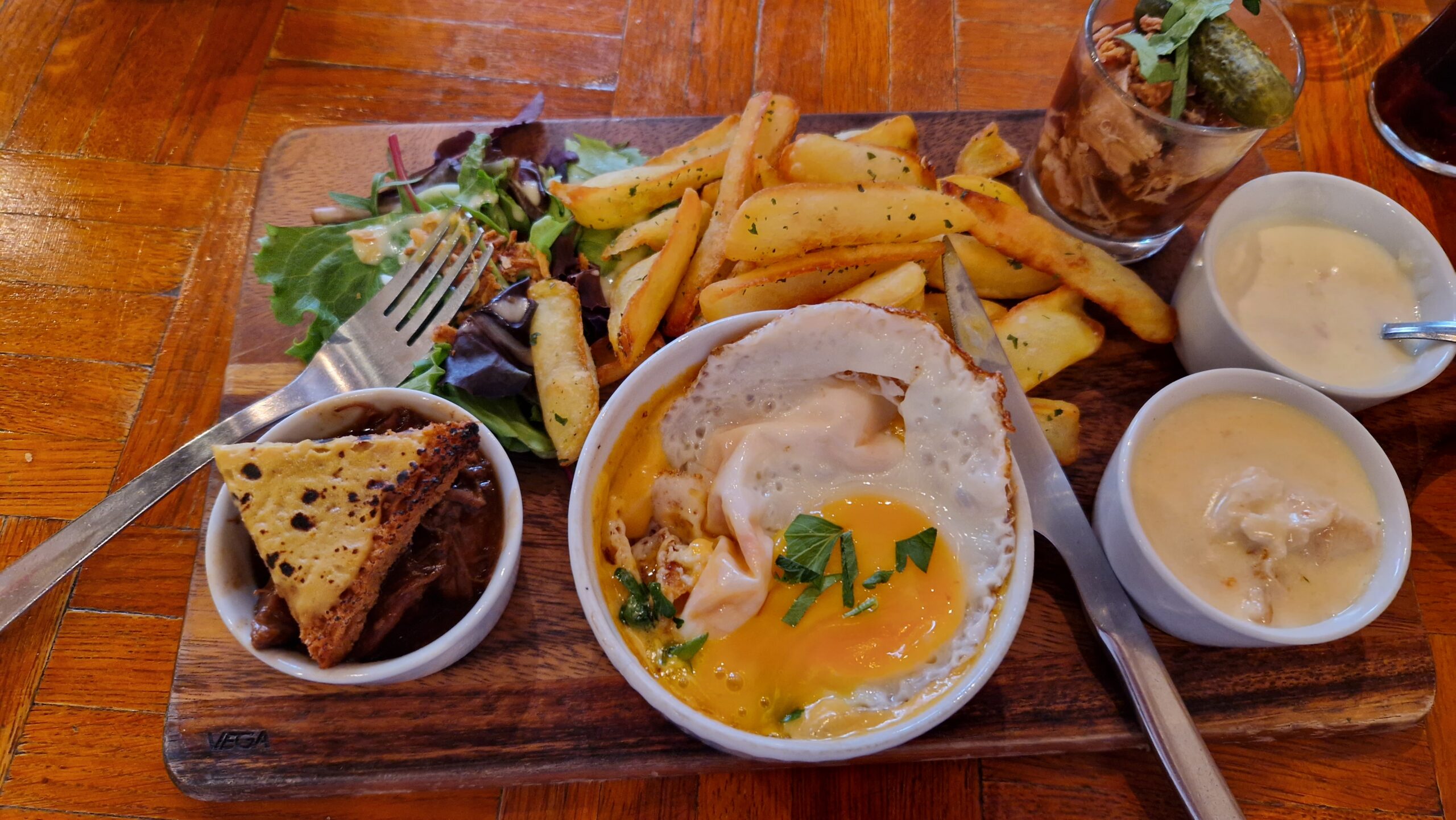
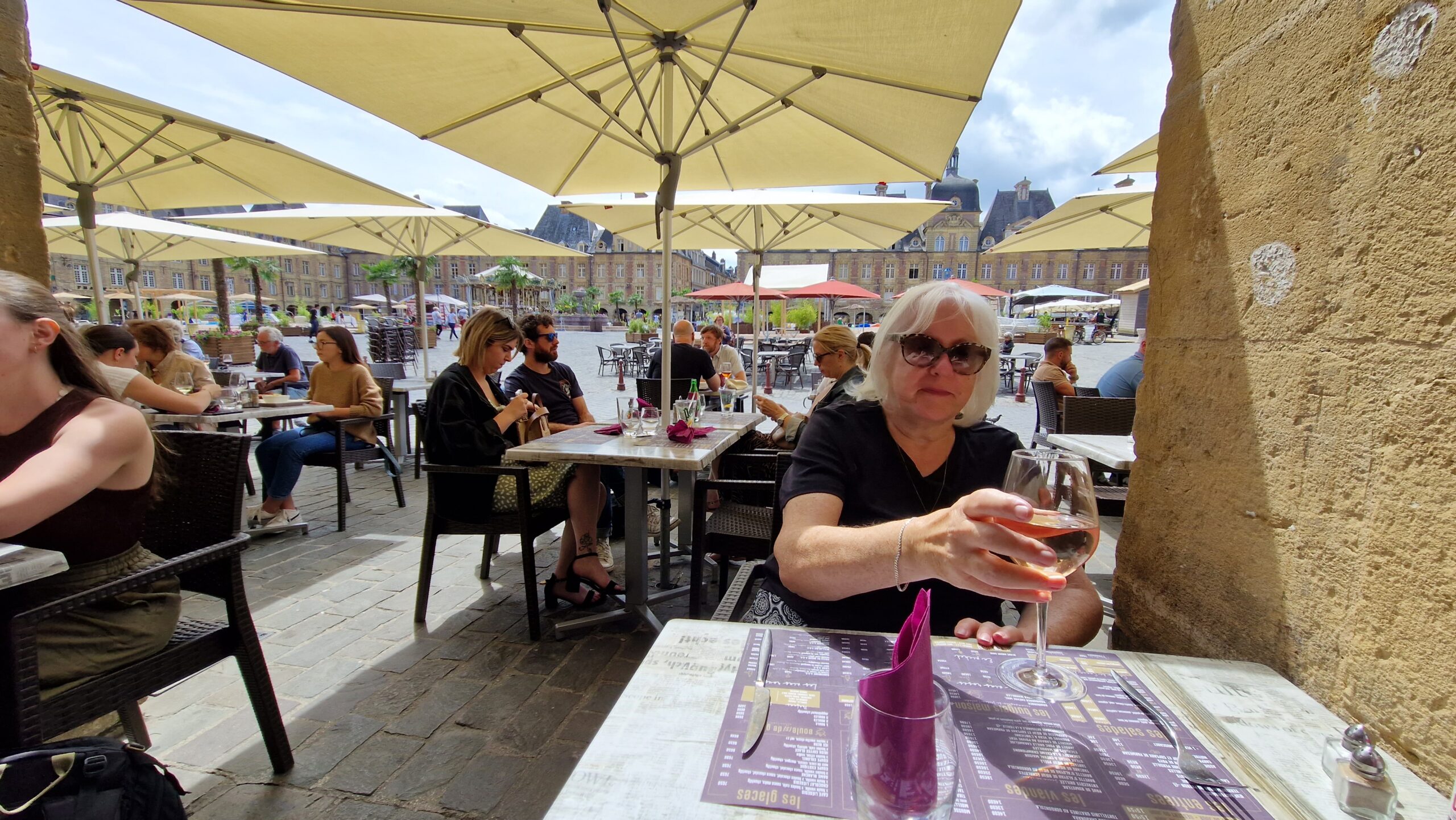
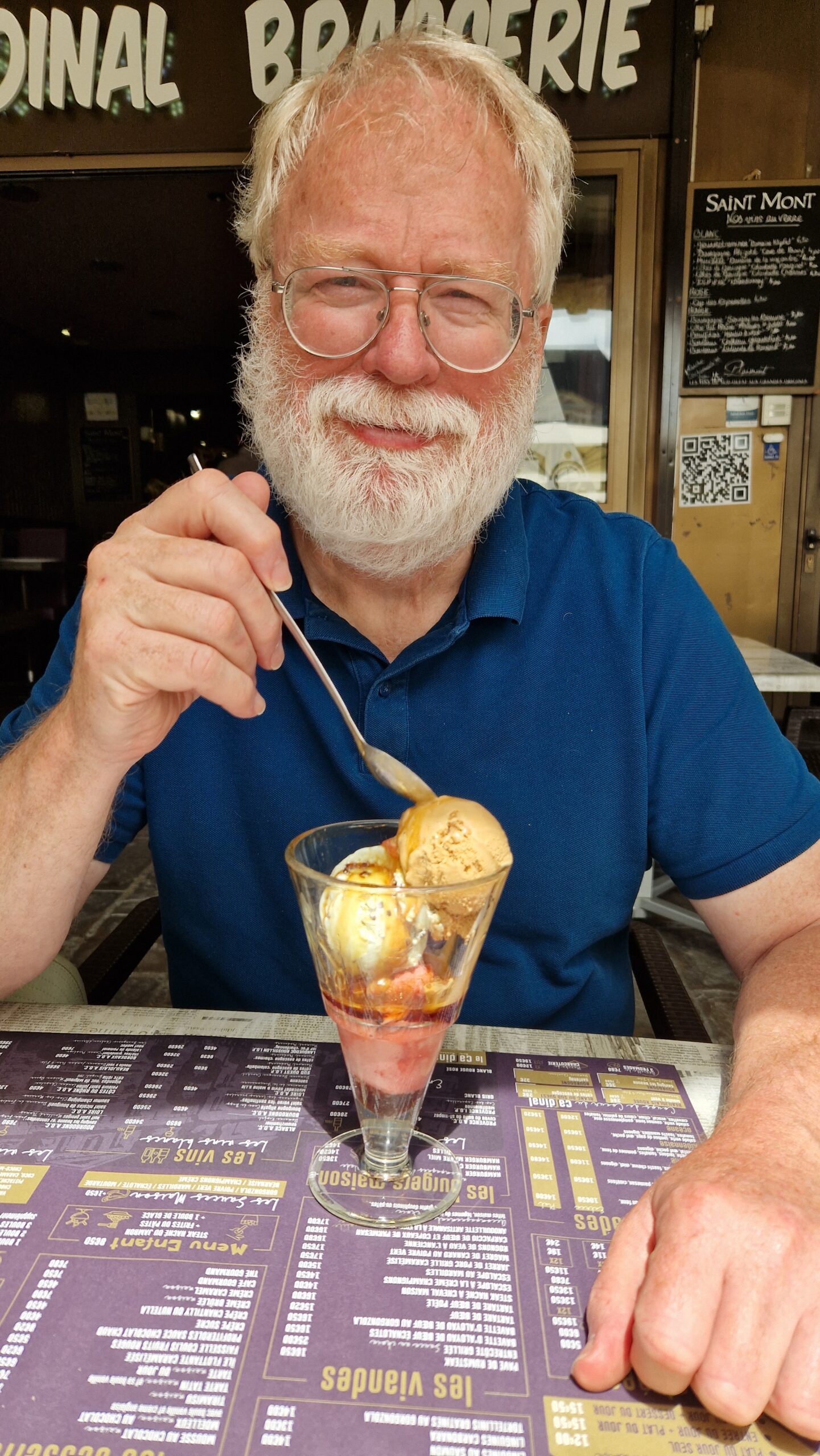
The next day we walked into the town, stopping for a very nice lunch at a cafe on Place Ducale – the main square (again, I was forced to try the local ice cream!).
The town is home to the International Institute of Puppetry (yes, such a place exists!) which hosts a big puppetry festival every two years. We were a few months too early for the festival but in the side of their building, every hour, a giant mechanical puppeteer appears to act out a different short scene from some local historical saga (click below to play the video).
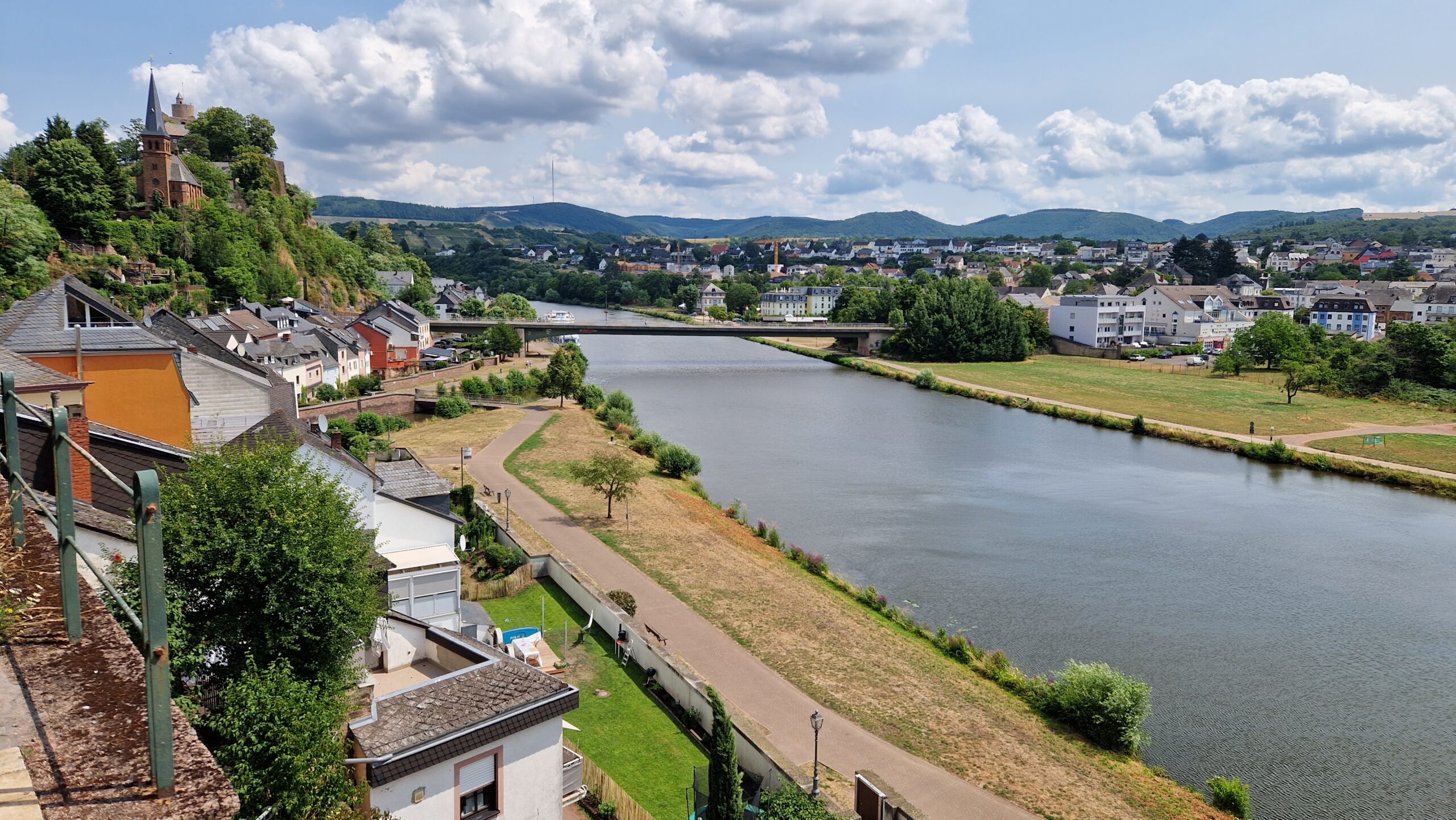
By now (9th) we were in need of a laundry stop so we found a campsite on our route north and booked in for two nights. Camping Waldfrieden is set in the woods just outside Saarburg, a town on the River Saar, south of Trier and close to the Luxembourg border.
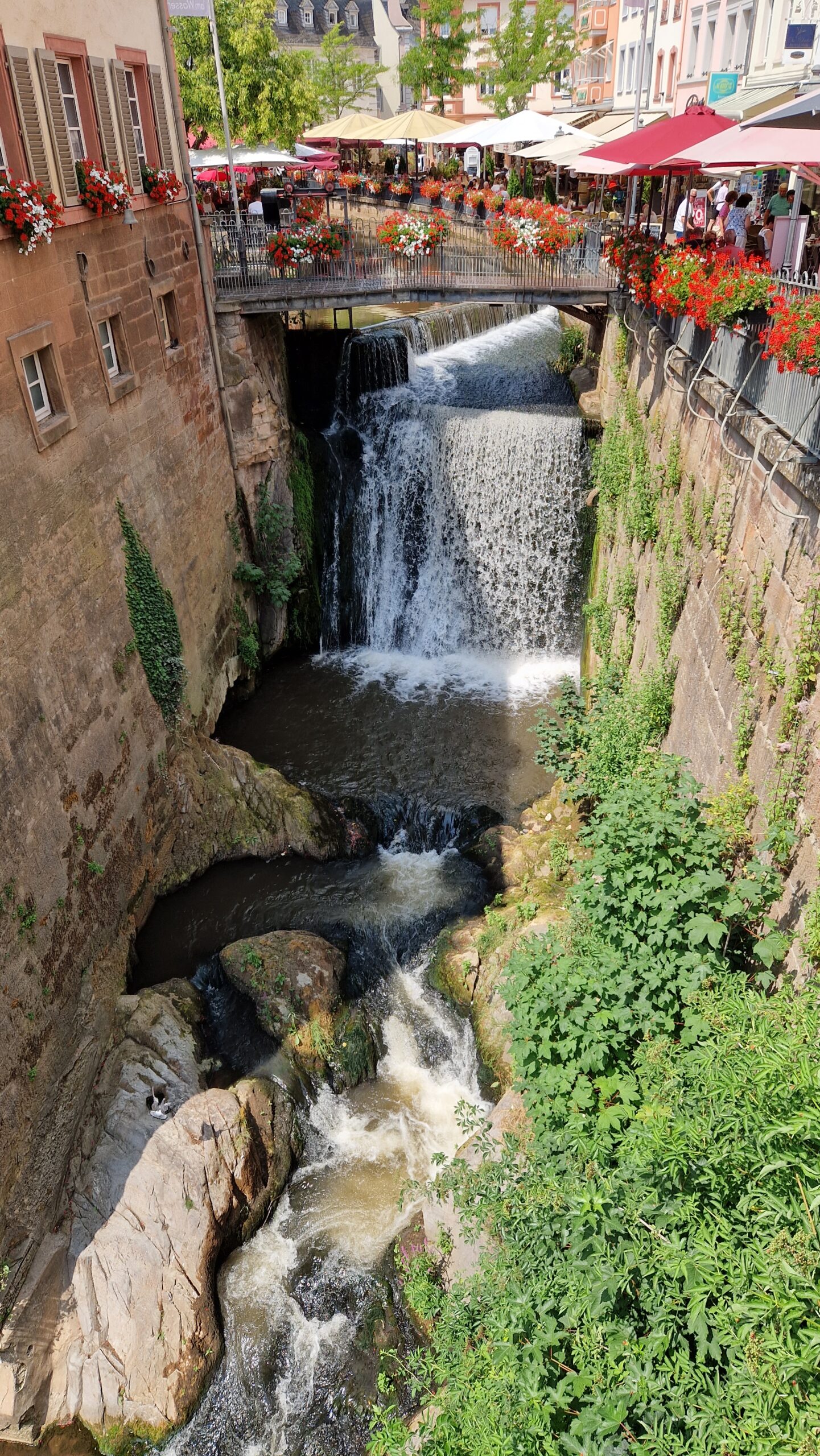
In the 13th century the River Leuk was redirected through the town centre to join the Saar. The resulting waterfall was used to power three water wheels of the town mill (now a museum). The cascades are now surrounded by flowers and street cafes making a very pleasant spot for an evening meal.
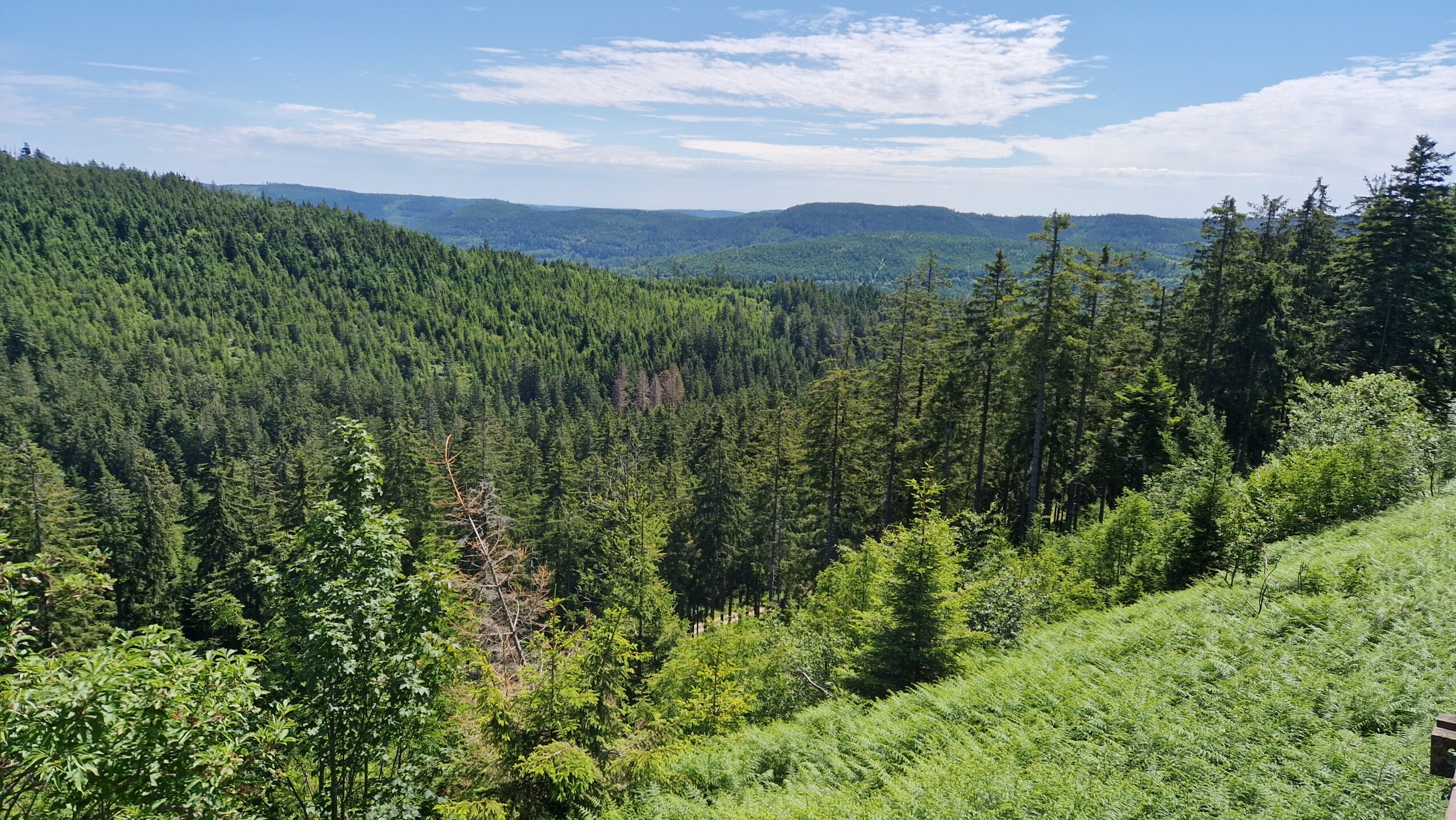
On Saturday (8th) we drove north along the best known scenic route in the region – the Schwarzwaldhochstraße or the Black Forest High Road – which ends in Baden-Baden. We stopped for a short break at Mummelsee, a lake on the high road which has lots of interesting legends about mermaids living in the lake who occasionally fell in love with local villagers (it never ended well!).
We didn’t stop in Baden-Baden (no suitable sites) but instead drove on to a stellplatz in Ettlingen, a small town just south of the city of Karlsruhe.
That afternoon we walked to the local Alde to top up on supplies and the following morning went into the town centre. Lots of street cafes, unusual statues and an excellent bakery!
Sue was keen to visit Strasbourg, just across the French border from the Black Forest but we were having trouble finding somewhere suitable to stay near the city. We were about to give up but decided to take a completely different approach – go without the motorhome. We paid for two more nights at Schonach and then used the included travel passes to take a bus and two trains to Kehl, a town on the german side of the Rhine directly opposite Strasbourg on the other bank. We then boarded a tram which carried across the border straight into Strasbourg’s city centre – the joys of free movement!
Strasbourg is regarded as the capital of the Alsace (now called the Grand Est region). It’s an important centre of manufacturing as well as the seat of the European Parliament. The centre is full of attractive historic buildings but it’s centrepiece is the gothic Cathédrale Notre-Dame.
The interior has many impressive features but the most interesting is the huge Astronomical Clock, regarded as a Renaissance masterpiece. Everyday, animated figures of the apostles process around the base at noon.
If you come to the city you have to visit the ‘Petite France’ quarter. formerly the home of tanners, millers and fishermen, it is a district full of half-timbered 16th & 17th century houses surrounded by waterways.
On the Wednesday (5th) we drove northwards into the Schwarzwald. We were aiming for Triberg, one of the most popular towns in the area but, as it seemed to have nowhere to stay overnight, we ended up in a Stellplatz in the small town of Schonach, 10 minutes drive further north. The town was extremely quiet but looked as it would become much busier in the Winter (there was a ski-lift just next to where we had parked). When paying for the overnight stop at the tourist office we were pleasantly surprised the price included free travel on buses and trains anywhere in the Black Forest so the next morning we used the free bus to travel into Triberg.
Triberg is famous for two things. Firstly – cuckoo clocks! The exterior of the biggest shop in the town was even designed as a working clock.
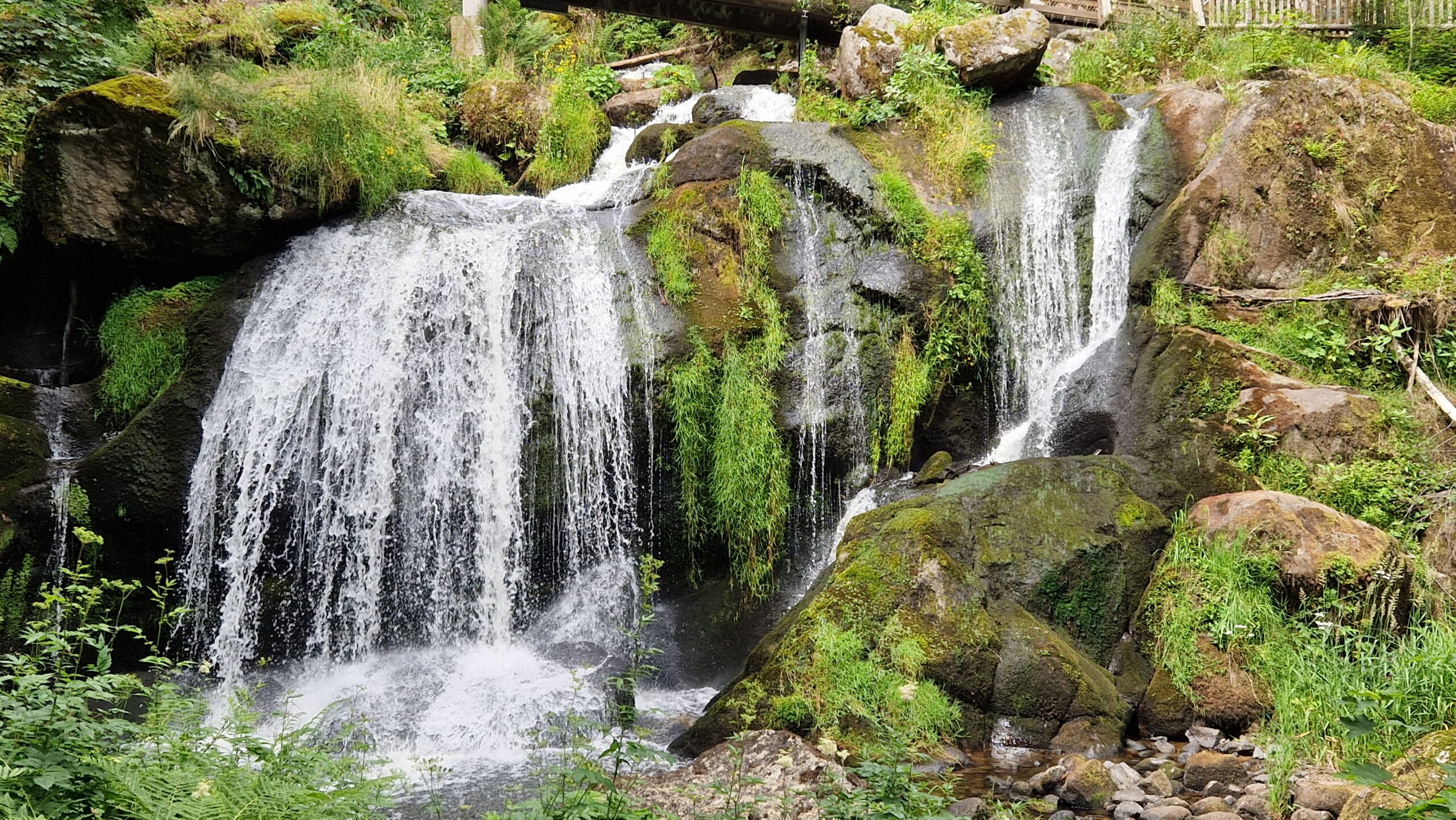
Secondly and perhaps a little more impressive are the Gutach Falls, a series of seven cascades which form the highest waterfall in Germany (160 metres).
The town’s museum had displays of the unusual traditional womens headwear – the red bobbly hat was certainly used a a logo all over the Black Forest.
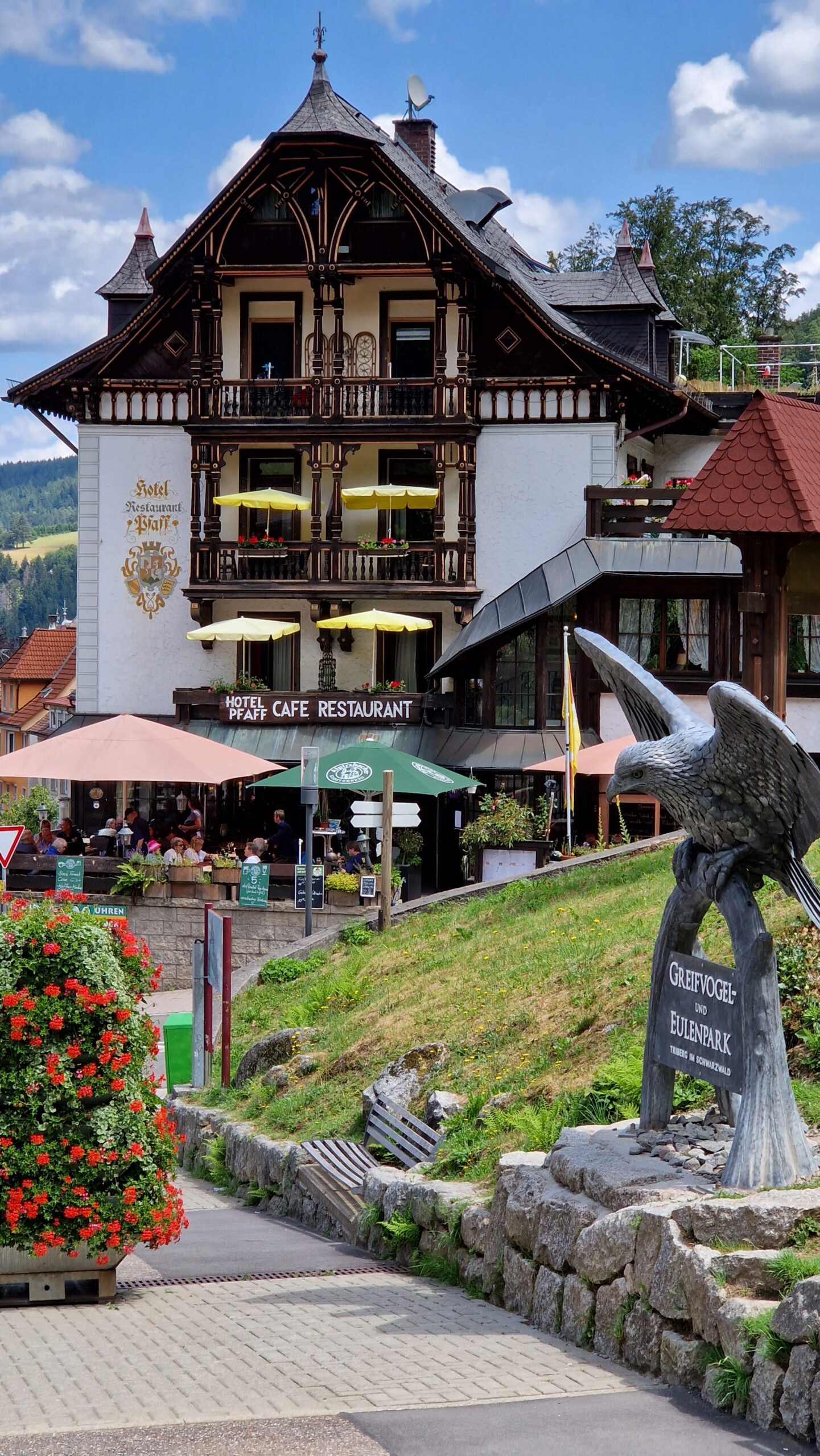
We walked past the delightfully named Hotel Pfaff to a very traditional looking cafe where I had no choice but to sample their delicious Black Forest gateaux!
On the Monday afternoon (3rd) we headed further west into the Black Forest and it’s biggest city, Freiburg. I had visited here once before, on a school trip in 60’s – needless to say, my memories of that time are getting a little faint! We stopped at a Stellplatz on the northern outskirts of the city for two nights – basically a giant car park between the city football stadium and a small airport, but despite that it was surprising quiet at night. Most importantly, it was right next to a tram stop that gave us quick access to the centre.
The following day was spent wandering around Freiburg. Our first stop was the food court at the indoor market where I had an African dish and Sue went for a more traditional dish of Spaelzle (German egg noodle dumplings).
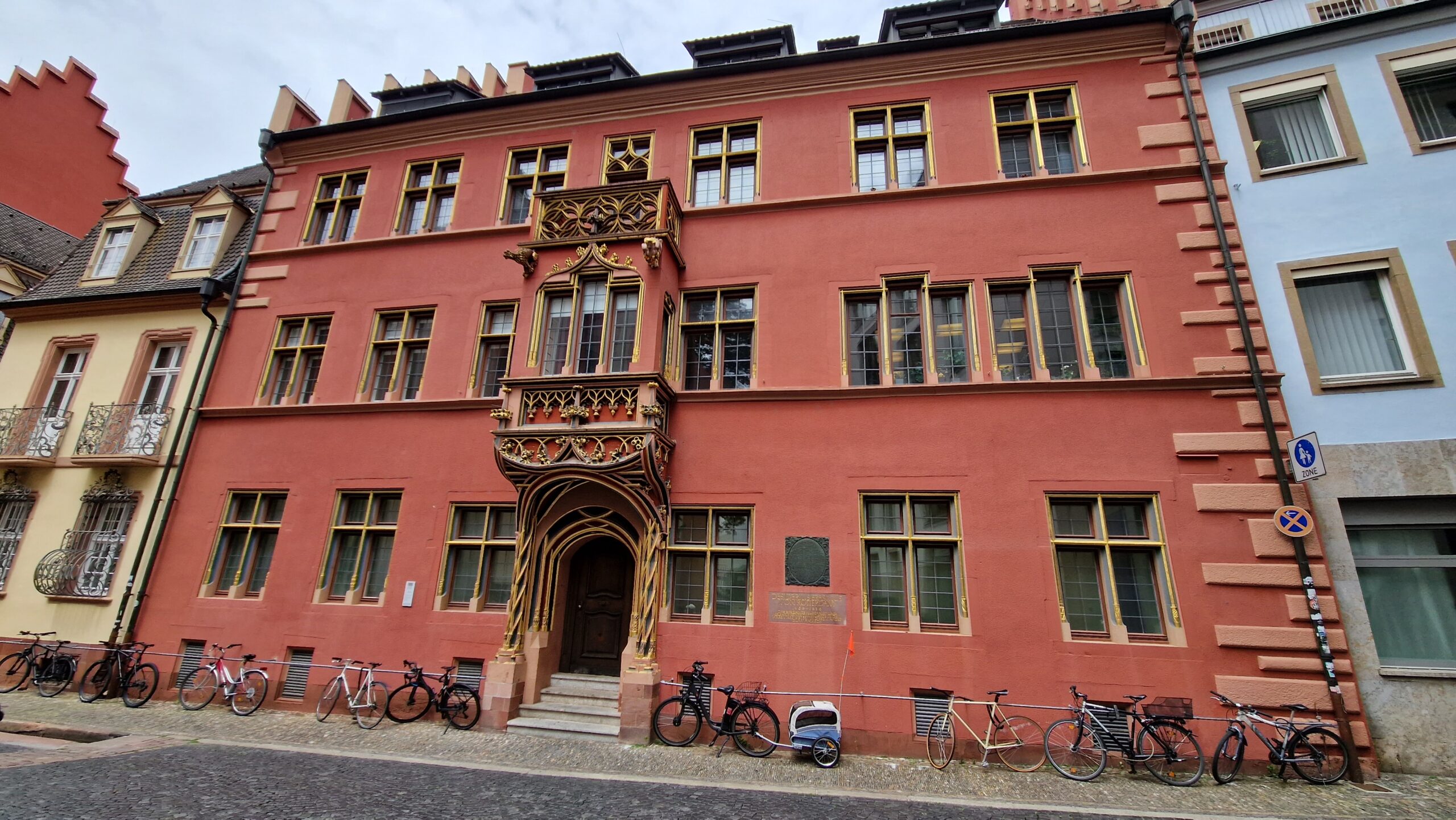
The city dates back to the 12th century and has a proud tradition of independance (it’s name translates to ‘free town’) and many of the historic buildings have survived despite heavy bombing during WWII (including, on one mistaken occasion, by the Germans themselves). In the 2nd photo below you can spot a unique feature – the Bächie – a system of gutters originally used to provide water to fight fires and feed livestock (never for sewage). Our visit was on a hot day and plenty of children were using them to cool off!
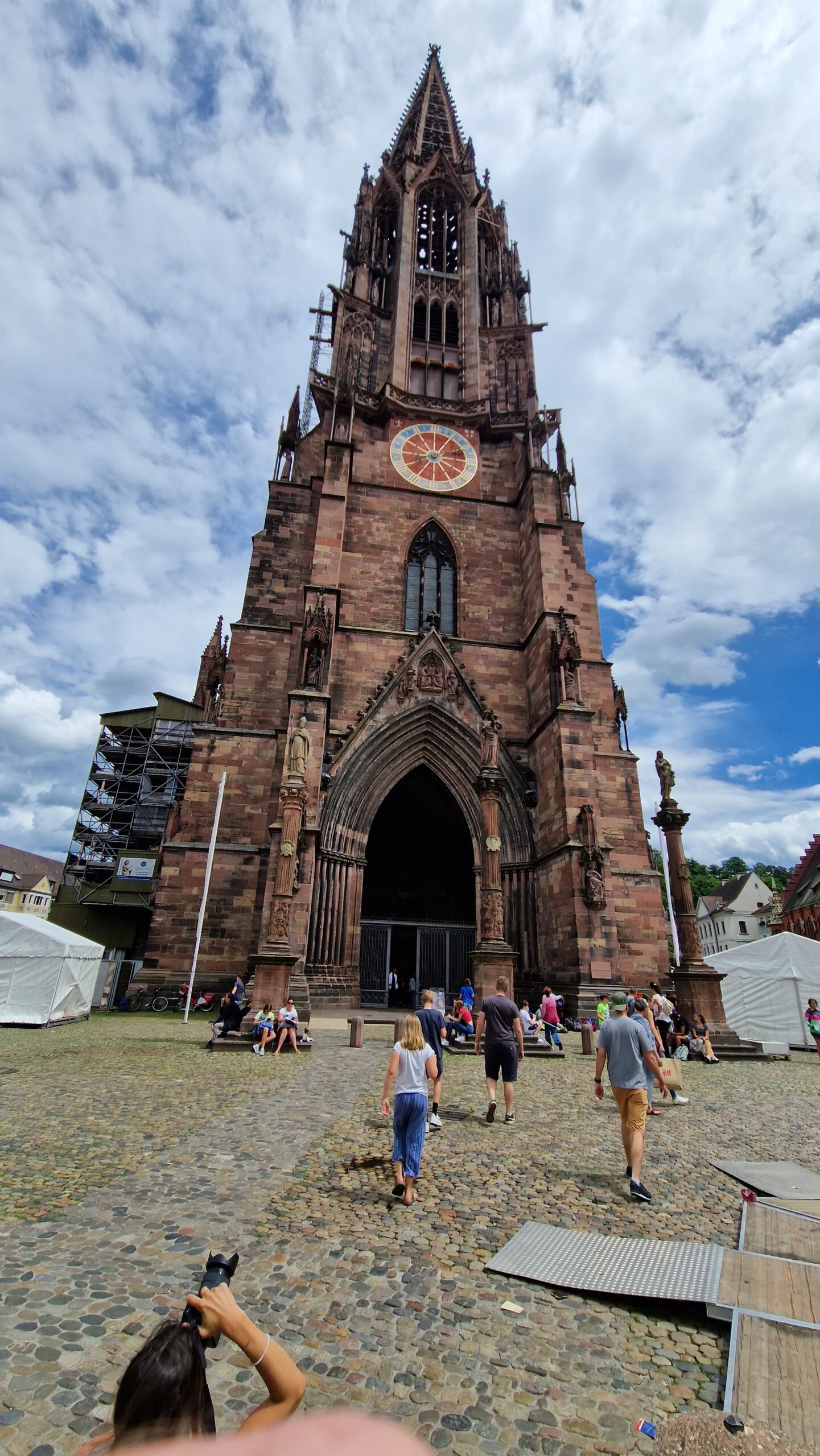
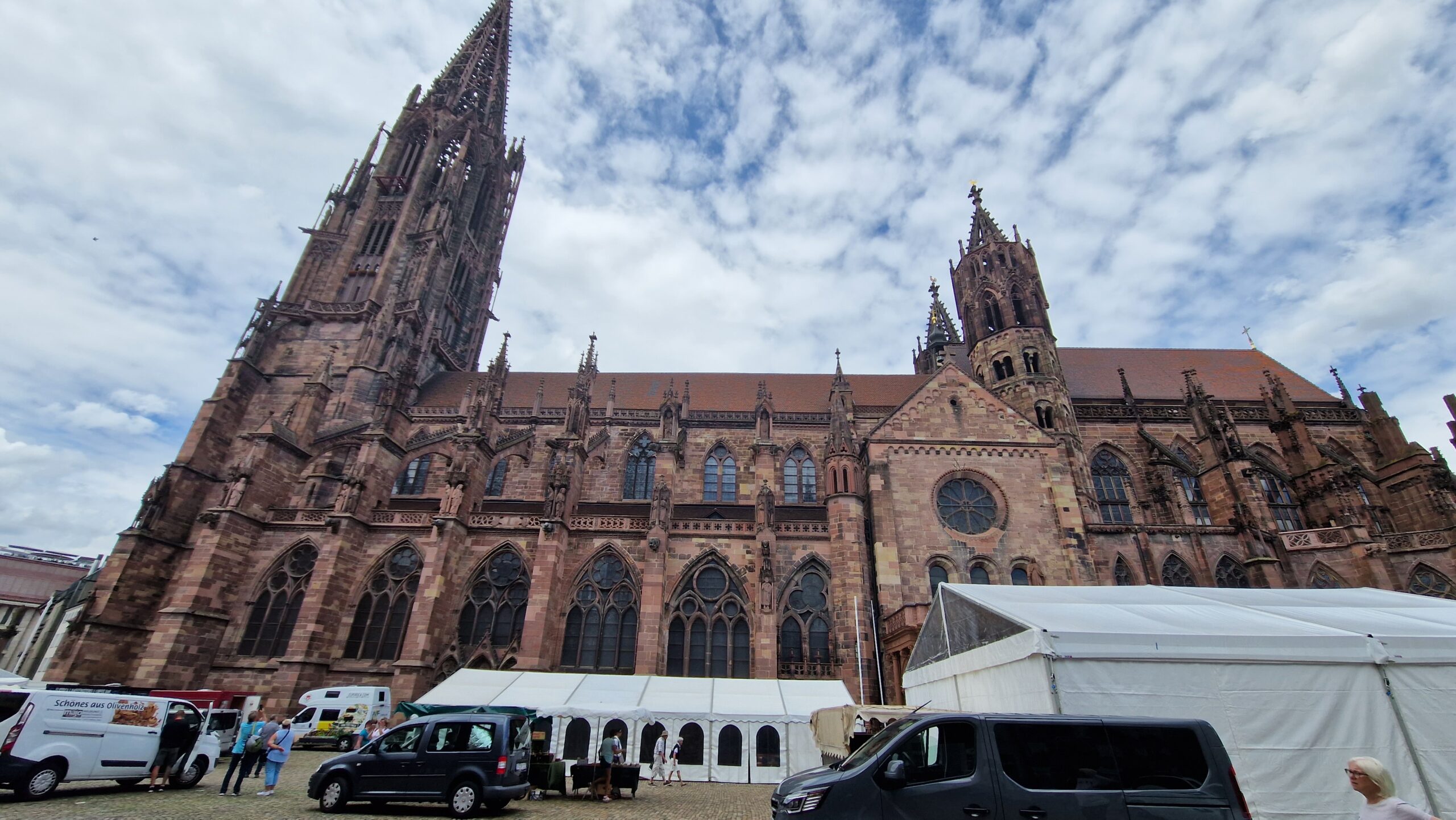
The most impressive structure is the Münster. This cathedral was started around 1200 and has a beautifully designed spire.